The 25 Types of Executive Protection Agents – AKA Bodyguards

Fun Edition – A brutally honest field guide to many of the personalities you will find on any given  detail.

Let’s start with a disclaimer: This is all in good fun and mostly a light-hearted educational effort (…mostly). If you see yourself in one of these, take it as a chance to laugh, learn, and maybe reflect. Don’t worry, we’ve all been at least one of these at some point. Growth starts with self-awareness… and hopefully,  fewer mirror selfies.

1. The Tacticool Operator – Full MOLLE vest at a low-threat breakfast. Looks like he’s about to breach a compound to grab the client’s latte. Brings more gear than a Memorial Day sale at Palmetto State Armory.

2. The “I Know It All” – Claims he’s protected royalty, billionaires, and probably worked with a three letters agency. He/she won’t take ANY feedback but will gladly give you a TED Talk on unnecessary subjects you didn’t ask to know about.

3. The Shadow Ninja – Ghosts the second things get real, and s***t hits the fan. No one’s seen him since call time, but he swears he’s maintaining overwatch. Last seen ‘monitoring from a distance’, usually from the hotel buffet.

4. The Bully – Confuses intimidation with work competence. Yells at hotel staff. Threatens the valet. Bullies his teammates.

5. The Instructor – Treats every shift like a live seminar, whether you asked or not. Will gladly debrief you on your shoelace technique and critique your placement of your lapel pin.

6. The Gearhead – Shows up looking like a tactical vending machine. 19 gadgets, 4 flashlights with zero clue how to use anything. But hey, his gear costs more than your monthly rent. (Literally rattles as he walks down the quiet venue hallway with the principal.)

7. The Look-At-Me Suit – Carries himself like a runway model, impeccably tailored, hair shellacked to perfection, gleaming cufflinks, and a tie pin that’s seen more action than he has. Looks sharp, moves slow, and folds faster than a lawn chair at the first sign of trouble.

8. The Ghost of Contracts Past – Hasn’t worked a detail since flip phones were standard issue but claims to have protected everyone from the Pope to Elon Musk. No current gigs, just an endless loop of war stories, name-drops, and “you had to be there” moments.

9. The Quiet Pro – Calm, prepared, and drama-free. Doesn’t post, doesn’t brag, just shows up early, stays squared away, and handles business. He rarely speaks, but somehow always knows what’s coming. Never says a word, but you know he’s the one keeping things together. (Quite often has more experience than the whole team put together but sees no reason to bring it up or discuss it.)

10. The Client’s New Best Friend – More commonly known as the “BuddyGuard”. Desperate to be noticed by the client. Overshares personal stories. Laughs way too hard at the client’s jokes. Always standing just a little too close. Probably gets replaced after one trip. Always very quick to tell everyone how he and the principal have a “close knit relationship.”

11. The Rooftop Ninja Paranoid – Certain the next threat is coming from a rooftop sniper, a flower pot, or that sweet old lady with the purse. Scans every vent and pigeon like it’s housing a tactical assault team. Lives in a permanent state of Code Red, with zero chill. Pure cortisol, no calm whatsoever.

12. The LinkedIn Warrior – Online, he’s a tactical genius with elite leadership skills. On the ground? He panics when the elevator skips a floor. His resume’s impressive…too bad reality didn’t get the memo.

13. The Angry One – Everything was better “back in the day.” Finds fault with everything and everyone, especially if they’re breathing. Hates the client, the team, the hotel coffee, and probably the very concept of happiness and life itself.

14. The Philosopher – Talks more about ego death and quantum consciousness than safety zones and exits. Probably carries a worn-out copy of The Art of War and refers to threats as “energetic imbalances”.

15. The Codebook Guy – He is the human rulebook. Carries a laminated handbook like it’s a sacred text and quotes protocol like scripture. Has a meltdown if someone takes initiative without a written directive and a three-signature chain of command. Remember the yellow footprints in boot camp? This is the guy…

16. The Influencer – Formerly known as the Selfie Soldier 2.0. Every detail is a photo shoot and bragging opportunity. Can’t walk past a mirror without a tactical selfie. Hotel bathroom? Perfect for a photoshoot. Motorcade reflection? Even better. More focused on building their following than protecting the principal.

17. The Drama Queen – Complains about the hours, the post, the hotel pillow, and the client’s attitude, usually before their shift even starts, while they’re eating breakfast in a 3 Star Michelin restaurant. Thrives on tension and somehow turns every shift into a soap opera. If there’s peace on the team, give it 10 minutes… they’ll fix that.

18. The Certification Addict – Alphabet soup after their name and has more certificates than field hours. Proud graduate of every tactical, medical, and underwater knife-fighting course on the planet… but still can’t plan a basic advance or read a site map without getting lost.

19. The Gear Floater – Shows up empty-handed like it’s his first day…every day. No earpiece, no radio, no flashlight… somehow, no tie either. Treats the team like a mobile supply depot and still acts like he’s doing you a favor.

20. The Diplomat – He’s “Switzerland”, neutral, polite, and too nice to say no. Bends over backward to avoid conflict, says yes to everything, and somehow ends up overworked, overlooked, and underappreciated.

21. The Overcompensator – Short guy, big ego, bigger sunglasses. Talks like a tier-one operator, moves like a traffic cone. Folds the moment things get loud and real.

22. The Chronically Late Guy – Always “five minutes out”, even when the shift started an hour ago. Blames traffic, GPS, the rotation of the Earth, anything but himself. Shows up mid-shift with a coffee in hand and zero shame.

23. The Gym Bro – Lifts for three hours before call time, then passes out in the follow car. Protein shaker rattling like a maraca, sleeves one size too small hanging on for dear life, and zero clue where the principal is.

24. The One Assignment Wonder – Did one detail six years ago and hasn’t stopped talking about it since. Drops acronyms like candy, name drops vaguely. You’d think he ran a presidential motorcade, but it turns out it was a mall opening.

25. The One with “No Filter” – Says the quiet part out loud… and plenty no one ever wanted to hear. Awkward jokes, offhand comments, and zero reading of the room. Has made at least one client, staff member, and hotel manager deeply uncomfortable…before lunch.

BONUS TYPE: The Self-Promoter – Wears branded merch on every detail. Business cards in the glove box. Turns casual conversation into a sales pitch.

At the end of the day, this list is a humorous take on real-world behaviors we all encounter in the field. Recognizing these behaviors, whether in ourselves or in others, is not about assigning blame, but about promoting self-awareness and professional growth. Executive protection is a high-stakes environment where attitude, adaptability, and accountability matter as much as any other kind of skill. The goal isn’t perfection, it’s progress. Let’s all of us aim to be the type of professional others want on their team. And remember… A little humor along the way doesn’t hurt.

Did we miss a type? Share your experiences in the comments, and let’s be honest, we’ve all played one of these roles at some point in our careers.

#ExecutiveProtection #CloseProtection #SecurityProfessionals #BodyguardLife #ProtectiveDetails #EPCommunity #SecurityTraining #SecurityIndustryHumor #FieldNotesFromTheDetail #RealEPStories


Boost Your Security Website with a Free SEO Audit

A website isn’t just about flashy graphics, big promises, or a few selling words. It’s so much more than that. And while your site might look fine to you, if it’s not optimized for visibility, credibility, and conversion, you could be losing business every single day.

At Mellon360° Marketing for Security, we know this industry inside and out. We also know many colleagues started their companies from scratch, often on a shoestring budget, building their own websites on no-code platforms. And that’s okay, many of us began that way. But at some point, you need to take your online presence seriously and get it right. We’re here to show you how, and that’s why we’re offering a FREE website audit to 3 selected security companies.

This is your chance to discover what’s hurting your website’s conversion and how to fix it. Find out about:
✅ Hidden SEO issues
✅ Site speed & mobile-friendliness
✅ How well your services are showcased
✅ Credibility signals
✅ Content audit
✅ Legal compliance audit
✅ Actionable tips to fix what’s costing you leads

👉 To apply, visit https://mellon360.com/contact/, fill in your contact information, and in the Message field include your website link with the text “Website Audit.” Please note: all interested companies must submit their website link by September 5th to be considered.


#MarketingForSecurity #SecurityMarketing #ExecutiveProtection #PrivateSecurityCompany #Mellon360 #LinkedInMarketing #FreeWebsiteAudit #SecurityIndustry #DigitalMarketingForSecurity #SEOForSecurity

Free Courses & Tools for Security Professionals — Because Sharing is Caring

Here’s a list of free tools and courses we’ve collected over the years for security professionals, perfect for using your downtime to build skills and stay ahead. Feel free to share, and if you know of other great tools or free training not listed here, drop them in the comments and help someone else grow.

💻 Courses
Council of Europe https://help.elearning.ext.coe.int/

FEMA https://training.fema.gov/is/crslist.aspx?page=2&lang=en

TRIPwire https://tripwire.dhs.gov/training-education/counter-ied-training-0#faq-question

Center for Development of Security Excellence- Defense Counterintelligence and Security Agency https://www.cdse.edu/Training/eLearning/

ESRI academy https://www.esri.com/training/catalog/search/

MSG https://www.managementstudyguide.com/corporate-etiquettes.htm

NWC https://usnwc.libguides.com/c.php?g=494120&p=3381401

Disaster Ready Org https://www.disasterready.org/

Basel Institute of Governance https://baselgovernance.org/basel-learn

My Languages Org https://mylanguages.org/

UNODC https://www.unodc.org/e4j/en/tertiary/counter-terrorism.html

UNODC Global E-Learning https://www.unodc.org/elearning/en/courses/course-catalogue.html

United States Institute of Peace https://www.usip.org/academy/catalog-global-campus-courses

Counter-Terrorism Training Suite https://ct.protectuk.police.uk/

United Nations Department of Safety & Security https://training.dss.un.org/

UNICEF https://agora.unicef.org/

TEEX https://teex.org/class/AWR375/

Geneva Centre for Security Sector Governance https://www.dcaf.ch/resources?type=elearnings

SANS Institute https://www.sans.org/cyberaces/

NIST https://www.nist.gov/itl/applied-cybersecurity/nice/resources/online-learning-content

Kaya by Humanitarian Leadership Academy https://kayaconnect.org/


🔎 Resources/Tools
Counter Terrorism Guide https://www.dni.gov/nctc/index.html

Centre For Research and Evidence on Security Threats https://crestresearch.ac.uk/resources/

Health and Safety Executive https://www.hse.gov.uk/simple-health-safety/risk/risk-assessment-template-and-examples.htm

Human Security Collective https://www.hscollective.org/our-resources/our-resources/?acceptCookies=65c2c526e98d0

National Sex Offenders Public Website (USA) https://www.nsopw.gov/search-public-sex-offender-registries

Counter Extremism Project https://www.counterextremism.com/about

SPLC https://www.splcenter.org/hate-map

Stanford Center for International Security and Cooperation     https://cisac.fsi.stanford.edu/mappingmilitants

Global Network of Extremism and Technology https://gnet-research.org/

Bellingcat https://www.bellingcat.com/category/news/?fwp_categories=news

Media Bias Fact Check https://mediabiasfactcheck.com/center/

2023 Index of Economic Freedom https://www.heritage.org/index/about

ESRI real-time mapping NYC https://coolmaps.esri.com/#12

When bodyguards become the risk

This is another great example of when the bodyguards refuse to learn and thus, become the risk. It’s one thing for civilians to overlook digital footprints. But when trained EP agents repeatedly ignore known vulnerabilities, that’s not merely a mistake, it’s a significant security failure. And unfortunately this isn’t new.

In 2018, Strava’s Global Heatmap exposed covert military bases and routine patrol routes. That was seven years ago. We’ve known about this. In 2024, investigations revealed dozens of EP agents from U.S., French, and Russian teams publicly sharing workout data, which included 26 U.S. agents (Biden’s EP team), 12 French GSPR members (Macron’s team) and 6 Russian FSO officers (Putin’s team).

And now, in 2025, Swedish bodyguards for the Prime Minister and Royal Family posted over 1,400 workouts to Strava, at least 35 of them revealed sensitive locations, including the PM’s residence, diplomatic sites, and vacation spots. Some of that data is still live and public today…

Let’s be clear: This isn’t a tech glitch! This isn’t bad luck! This is a failure to learn, adapt, and take responsibility. If your security team won’t fix the risks they’re causing, they’re not protecting anyone, they’re compromising everything.

In our profession, “I didn’t know” is not a valid excuse. When you normalize digital negligence, you normalize operational failure. It’s been seven years since the first public warning. If your team still doesn’t have digital discipline, your client is already exposed, and your operation is already compromised.

Read more here https://www.politico.eu/article/swedish-bodyguards-workout-data-exposes-royal-familys-private-vacations/

#ExecutiveProtection #Strava #DigitalSecurityRisks #SecurityFailure #StravaLeaks #ProtectiveIntelligence #OperationalSecurity #DataExposure

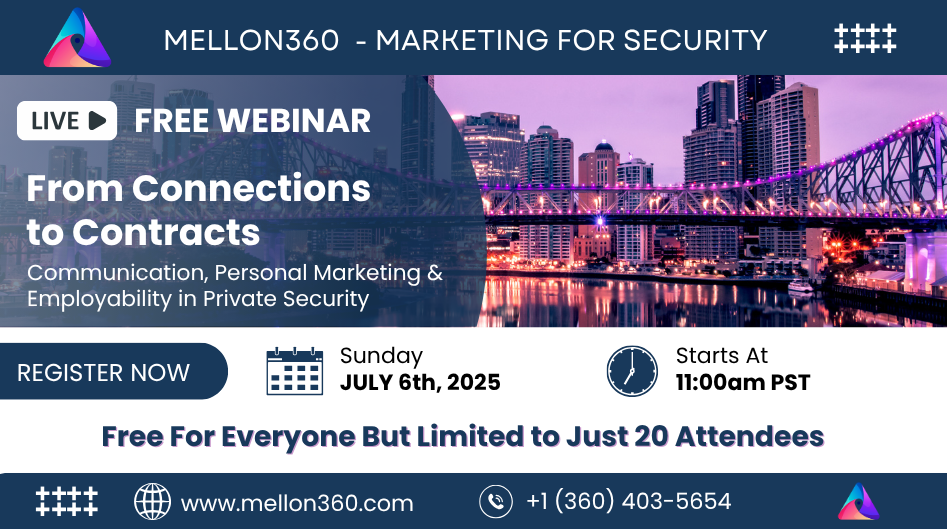
Free Webinar by Mellon360 – From Connections to Contracts

Join us for our first free webinar with Mellon360° Marketing For Security! Do you want to learn how to market yourself properly in the security industry and go from Connections to Contracts? Mellon360° Marketing For Security is hosting a FREE 3-hour webinar on a topic that’s often overlooked—or misused—in our industry:

Marketing for Security Professionals
📅 July 6th, 2025
🕛 11:00 AM PST
💻 Virtual

This session is designed specifically for professionals in physical or cybersecurity, as well as those transitioning from military or law enforcement roles.

At Mellon360° Marketing for Security, we specialize in branding and marketing exclusively for the security industry and we’re committed to helping our fellow professionals grow their careers and businesses.

Course Description:
This webinar will help security professionals navigate the fine line between OPSEC, confidentiality, and effective self-promotion without compromising discretion.

We’ll cover the most common marketing and communication mistakes that can damage credibility or cross professional boundaries. You’ll learn how to build a trusted presence (especially on LinkedIn), how to use modern marketing tools in a strategic and ethical way, and gain practical tips on resume writing, event networking, and more to help you attract the right clients, employers, and collaborators.

Whether you’re in executive protection, risk management, intelligence, or cybersecurity, this session will help you communicate your value in a way that’s visible, professional, and aligned with the standards of our industry.

This webinar is free to attend (we don’t want your hard-earned money—buy yourself a coffee and join us!), but space is limited to just 20 participants.

Reserve your spot early! Visit https://mellon360.com/contact/, fill out the contact form, and mention “Marketing Webinar” in the message section.

The Missing Link in Executive Protection: Why Protective Intelligence Services Matter More Now Than Ever

Those who have been in the business for some time will tell you that executive protection is 90% about preventing threats and only 10% about responding to them. Preparation is key when it comes to protective details, and while physical security measures, highly trained agents, luxury vehicles, and advanced equipment are all critical components of any operation, one often-overlooked asset can mean the difference between proactive protection and reactive response: protective intelligence services.

We can all agree that the world is rapidly changing, and with it, so are the threats, how they materialize, and the individuals behind them. The ways in which hostile actors can reach and harm your clients are constantly evolving. A bodyguard today must consider and prepare for risks and threats that are significantly different from those of 15 or 20 years ago. The digital age has given criminals, stalkers, and hostile actors new tools to track, target, and attack high-profile individuals.  

Protective details are often perceived by the public as a purely physical profession, standing guard outside a client’s hotel room, escorting them from point A to point B, and responding to immediate threats. However, in reality, there is far more happening behind the scenes. A successful protective detail involves more than just the agents’ strength or combat skills. A security team that relies solely on reactive methods rather than proactive strategies is doomed to fail. If your protective team lacks the critical foresight needed to anticipate threats, avoid danger, and prepare before a situation escalates, failure is inevitable and failure in this industry can mean human loss, physical harm, asset loss, or reputational damage.

If you ask executive protection (EP) agents how often they have been provided with necessary protective intelligence by the companies that hired them, the majority will likely tell you they haven’t, unless they worked for a major corporation that either invested in its own intelligence division or sourced intelligence from a third party.

The reality is that most security firms neglect to integrate intelligence gathering and analysis into their protective operations, often citing cost concerns or client unwillingness to fund such capabilities. This short-sighted approach leaves agents in the field operating in a vacuum, exposed to a variety of dangers, limiting their ability to anticipate threats, assess risks, and make informed decisions that could prevent an incident before it happens. These security providers fail to recognize that protective intelligence is now a fundamental part of executive protection, just as advances, risk assessments, and threat assessments are (or at least, should be, for those still neglecting these basics). Intelligence should not be provided only if the client requests it; rather, it must be an integral part of every protective detail.

The Role of Protective Intelligence in Executive Protection Settings

Decades ago, intelligence services were primarily associated with government agencies and large corporations. However, today, with advancements in technology and access to open-source information, intelligence can be integrated into organizations of any size, whether small or large.

Consider this scenario: Your protective team has taken all necessary steps to keep your client’s dinner meeting at an A-list restaurant safe and confidential. They even booked the reservation under an alias. However, another customer at the restaurant recognizes your client and tweets on X, “Guess who’s having dinner at our restaurant?” followed by #YourClientsName.

Now, the location of your client’s dinner is public knowledge, rapidly spreading across X and other social media platforms. Meanwhile, your executive protection (EP) team still believes the visit is confidential, unaware that the client’s whereabouts have been exposed. This is critical information they should have in order to take precautions and act accordingly. But without protective intelligence services, they wouldn’t even know the exposure had occurred.

Now, let’s consider another scenario. One of your clients is on a business trip, staying at a hotel. Nearby, a protest is forming and moving closer to the hotel. As a security provider, you would want to advise your client to stay put until the situation stabilizes. But again, without intelligence services monitoring such developments, you wouldn’t have the necessary information to take proactive measures and you would ignorantly move your client into harm’s way.

Why Intelligence Matters in Executive Protection

Executive protection is not just about reacting to threats, it’s about preventing them from occurring in the first place. This is where protective intelligence plays a crucial role. While general intelligence involves gathering and analyzing information across various domains, protective intelligence is a specialized discipline focused on identifying, assessing, and mitigating threats before they materialize into real dangers.

Many executive protection teams rely solely on physical security measures, such as bodyguards, armored vehicles, and surveillance equipment. However, without an intelligence-driven approach, these teams are operating in the dark, reacting to threats as they unfold rather than anticipating, mitigating, avoiding, and/or neutralizing them ahead of time.

The Role of Protective Intelligence

Protective intelligence serves as the foundation of proactive security. It enables security teams to:

Identify Threats Before They Become a Problem – Protective intelligence involves continuous monitoring of potential threats, including hostile actors, criminal activity, cyber threats, and geopolitical risks. This allows security teams to take preemptive measures rather than relying on last-minute reactions.

Enhance Situational Awareness – Protective intelligence provides real-time updates on crime trends, civil unrest, and other evolving security threats in locations where clients are traveling or staying. This helps protection teams make informed decisions, adjusting routes and security plans as needed.

Mitigate Risks Through Social Media Monitoring – We live in a digital world and many threat actors use social media to track, expose, or target high-profile individuals. Protective intelligence includes monitoring online threats, identifying potential leaks of a client’s location, and flagging concerning activity before it escalates into a real-world risk.

Support Advance Work and Security Planning – Before a client arrives in a city/country location, at a venue, hotel, or meeting location, protective intelligence ensures comprehensive site assessments. Intelligence analysts vet the security of these locations, identifying potential risks and enabling teams to establish backup plans in case of emergencies.

Provide a Strategic Advantage to Executive Protection Teams – Without protective intelligence, bodyguards and security teams are left to react to threats in real time, often with limited information. With intelligence, they gain a strategic advantage, allowing them to operate proactively and avoid unnecessary risk exposure.

While executive protection agents are considered the last line of defense,  intelligence services can extend their protective reach beyond the immediate environment as they can provide:  

  • Location-based and Situation-based risk assessments – Evaluating crime rates, political instability, and recent incidents at destinations.
  • Live threat alerts – Real-time updates on emerging dangers such as civil unrest, roadblocks, or suspicious individuals.
  • Pre-mission planning – Conducting advances on venues, hotels, and travel routes to preempt potential risks.

Why Small Firms Avoid Intelligence Services

However, despite its undeniable value, or how many will seek education on the topic, many executive protection firms only integrate protective intelligence when a client specifically requests it, and they can charge for it. This is a highly flawed approach because protective intelligence should not be seen as an optional service to add on, but it must be a core component of every security detail!  

A team that operates without intelligence is only providing half of the protection necessary to keep a client safe. In contrast, a security team equipped with protective intelligence is proactive, informed, and always one step ahead of potential threats. The reality is that many small executive protection companies skip intelligence capabilities because they often function on tight budgets and want to prioritize the most visible security measures which are bodyguards, vehicles, and sometimes surveillance equipment without realizing that intelligence is the very foundation upon which these elements should be deployed.

However, waiting for a client to demand intelligence services before integrating them into a security operation is fundamentally flawed. A security company should be advising the client on what is necessary, not the other way around. And when the client does not wish to pay for it, then what? You should have it as part of the services you provide in order to prepare and equip your agents best. The reluctance to invest in intelligence is a classic case of reactive security planning instead of proactive threat mitigation and that comes with a cost.  

The cost of ignoring the use of protective intelligence is exposing themselves to unnecessary risk and liability. A single incident, whether it’s an ambush, a targeted attack, an embarrassing situation, or even a travel or meeting disruption, can severely damage a company’s reputation, not to mention endanger lives and assets. On the other hand, an intelligence-driven approach enhances the professionalism of a firm and gives clients a reason to trust in the protective measures they provide.

Again, consider this scenario: A protective team is escorting an executive to a conference in a foreign city. Without intelligence, they are unaware that the hotel is located near an area experiencing political protests. A sudden outbreak of violence places the client and the team at risk. With an intelligence component, this risk would have been identified in advance, and an alternative plan could have been executed.

Making Protective Intelligence a Standard, Not an Option

Security firms must begin treating protective intelligence services as a standard part of their operations, not an add-on that only high-budget clients receive. Even small firms can develop intelligence capabilities by:

  • Hiring or outsourcing intelligence analysts who can provide actionable insights.
  • Using open-source intelligence (OSINT) to monitor real-time threats.
  • Using technology and proper AI-driven tools to track risk factors across different regions.
  • Training security personnel to integrate intelligence into their daily routines.

Prevention can be more effective than reaction, considering the fact the enemy holds the element of surprise and chooses when, where and how. The primary goal of a protective team is to be able to detect when, where and how and take proactive actions to prevent attacks.  

Protective Intelligence services allow for:
-Early threat detection – Monitoring and identifying potential threats before they become direct dangers.
-Predictive risk analysis – Understanding patterns of criminal activity, protests, or hostile surveillance.
-Strategic planning – Knowing the safest routes, venues, and contingency plans in advance.

An intelligence-informed protective team doesn’t just protect, it ensures their client never even faces the threat in the first place. Protective intelligence should not be seen as merely an expense but an investment in the effectiveness and credibility of a security detail. The most successful executive protection teams are those that blend physical security with actionable intelligence, ensuring they stay ahead of threats instead of merely reacting to them. When a protective team has access to protective intelligence, they elevate their role from a “security presence” to a “security strategist.”

It is time for executive protection companies, especially the smaller firms, to rethink their approach. Intelligence is not a luxury; it is an operational necessity that must be built into every protective detail, regardless of client expectations. If the goal is truly to protect, then intelligence must be at the core of every mission.

Chris Grow, Managing Partner, LeMareschal LLC

CEOs Under Attack – The Growing Risks for Corporate Leaders

This article was first published in Chief Executive Officer


The recent assassination of UnitedHealthcare CEO Brian Thompson has cast a spotlight on the vulnerabilities faced by many corporate leaders and is a great example of how C-Suite executive’s safety can affect not only their personal wellbeing, but also can drastically affect a company’s reputation and stock. According to News Nation, UnitedHealth Group shares are down more than 14% since Thompson was shot and the company is counting its losses in billions.

While many corporations see security as an unnecessary financial loss and many won’t consider it in their budget, history has shown us that failing to protect their executives can cause an enormous financial loss. As we have seen, there have been many reported incidents surrounding violence towards C-suite executives. Some of the most well-known cases, the kidnappings of the Toronto crypto company CEO who got kidnapped last November and was held for $1M ransom before being released, the murder of the tech executive Bob Lee, founder of Cash App in San Francisco, in 2023, and the death of another tech executive Vivek Taneja, who was assaulted in downtown D.C. on February of the same year and succumbed to his injuries a day later. These incidents, along with many others, bring again to light potential dangers that corporate leaders face today.

Photo by Tima Miroshnichenko on Pexels.com

Reality Check

While the general public assumes that all high-profile individuals, including celebrities, have security, the reality is that many C-suite executives operate day-to-day without any security presence. Whether they are traveling for business, attending meetings and conferences, or simply going about their daily routines, these individuals often find themselves exposed to various threats without the support of a dedicated security team.

The reasons for this vary. In some cases, the cost of executive protection is not prioritized within the company’s budget. In others, reductions in force (RIF) have affected the security team. Additionally, even when security is provided, many executives resist it, preferring to avoid the perceived inconvenience of having protection around them. One of the biggest challenges when assigning security to specific individuals is their non-compliance, as they believe they will lose their privacy and be forced to change how they live their lives.

Significant Incidents Involving CEOs:

Brian Thompson was the latest victim, but not the only one by far:

  • Pava LaPere, a 26-year-old tech entrepreneur, was found dead on the roof of her building, half-naked, strangled, and brutally beaten.
  • 51-year-old Forrest Hayes, the former senior director of Apple’s worldwide operations, was killed by a high-priced prostitute who injected him with a lethal dose of heroin and then left him to die on his luxury yacht.
  • In 2019, Tushar Atre a tech executive and founder of a Santa Cruz-based web design company, was kidnapped from his home on October 1, 2019. He was later found dead in his girlfriend’s BMW SUV. Several suspects, including former employees, were arrested in connection with his death.
  • In 2022, Artemis Seaford, a high-level executive at Meta and dual U.S. – Greek national, was found to be surveilled by surveillance-for-hire software for around one year.
  • In 2015, Tadas Kasputis, one of the founders of CoinStruction and the ExMarkets crypto-exchange was kidnapped in his hometown Kaunas city in Lithuania by criminals who wanted to gain access to his crypto wallet.
  • In 1998, Bill Gates, was hit in the face with a cream pie as he was about to enter a building for a meeting in Brussels.
  • In 2018, Jeff Bezos had his mobile phone “hacked” after receiving a WhatsApp message.

As we can see from multiple cases, threats towards these individuals can come from any direction and at any given opportunity. Those of wealth or stature in society find themselves becoming a target or being “condemned” by groups who feel that they somehow deserve more and that their goal is best obtained through violence of some sort.

We all saw how executives and personnel from pharmaceutical companies were targeted during the Covid lockdowns and how specific minorities (Asian) have been singled out for harassment recently due to stories surrounding the supposed origins of Covid as well as the tedious political arena of U.S/Chinese relations. Russian businessmen/women have become victims of various crimes against themselves, their families, assets, and companies.

The Need to Protect the Brand

One thing that often escapes the attention of many corporate boards is that CEOs and other high-level C-suite executives are not just leaders of their organizations, they are the face of the company, the human embodiment of the Brand. Protecting these individuals extends far beyond safeguarding their lives; it is also about safeguarding the brand’s reputation, market value, and future stability.

The visibility of executives today has grown exponentially. Shareholders, clients, and the media closely associate a company’s identity and trustworthiness with its leadership team. When a CEO or prominent executive is harmed, whether through assassination, kidnapping or any other physical harm, the ripple effects can be catastrophic for their organizations. Such events can erode stakeholder confidence, shake public perception, and cause financial volatility.

For example, and as we mentioned earlier, following the tragic assassination of UnitedHealthcare CEO Brian Thompson, the company’s stock value reportedly dropped over 14%, resulting in billions of dollars in losses. This kind of damage is not limited to financial metrics alone; it can also impact on employee morale, customer trust, and the company’s ability to attract new business.

The brand-equity connection is further amplified in industries like technology, finance, crypto and healthcare, where executives are often seen as visionaries or cultural icons. Consider figures like Bob Lee, founder of Cash App, whose untimely death not only shocked the tech world, but raised concerns about safety for executives in high-risk urban environments. In these scenarios, the absence of robust protection not only puts lives at risk but also undermines the strength of the brand narrative and leadership continuity.

Corporate boards must understand that executive security is not just some numbers in your budget as an expense, but a proactive and strategic investment in their brand protection. While the first thing that comes to mind is the importance of preserving human lives, organizations have to also realize that any harm done to their executives and employees will have a tremendous impact on their business.

The loss of the leaders in their business (the brains behind their products), the loss of their intellectual property, and the disturbance of their daily operations will cause the employees, customers and investors to lose faith in them. Failing to protect their own executives leaves companies vulnerable, not just to physical threats but to reputational damage that can take years to repair.

Photo by Pavel Danilyuk on Pexels.com

The Giant With Feet made of Clay

One thing that has become increasingly apparent in light of these recent incidents is how surprisingly easy it can be for individuals, often with limited resources, minimal planning, and very little experience, to approach, harm or embarrass high-profile public figures, including CEOs and other C-suite executives. These events expose a concerning vulnerability: corporate leaders, who represent power and authority can still be physically or reputationally damaged with alarming ease.

The very perception of strength that many companies project, be it through financial dominance, market influence, or industry leadership, can quickly crumble when their most visible representatives are attacked or harmed. It reveals the “giant with feet made of clay”: an entity that appears powerful and unstoppable on the surface but, in reality, cannot adequately support or protect its executives, leaving them exposed to danger.

This illusion of invincibility creates a dangerous dichotomy. While corporations may excel at presenting their resilience in business operations, their failure to ensure the security of their leadership undermines their credibility. Each time a CEO or executive is harmed (whether through kidnapping, physical assault, or character assassination) it sends a message to stakeholders, employees, and even competitors that the “giant” is vulnerable. The company’s façade of stability cracks, and the repercussions can be severe:

  • Financial Fallout: Attacks on executives often trigger stock price drops, erode investor confidence, and cause millions, if not billions, in losses.
  • Reputational Damage: If a company cannot protect its leadership, what message does that send to clients, employees, and the public?
  • Operational Disruption: The absence or incapacitation of key executives can destabilize decision-making and hinder long-term strategic goals.

High-profile incidents, like the assassination of UnitedHealthcare CEO Brian Thompson or the kidnapping of crypto executives such as WonderFi’s Dean Skurka, are not anomalies, they are warning signs. They demonstrate that harm can come, not just from organized, well-funded adversaries or criminal organizations, but also from individuals acting alone with limited means. These cases emphasize a critical truth: public figures, especially those in leadership roles, are increasingly accessible targets.

Companies must reassess their priorities and abandon the illusion that their leaders are untouchable simply because they are perceived as powerful. Executive protection for your C-Suite executives is not a luxury or a budget allowance; it is a necessity. A company that fails to shield its most visible assets, its leadership, risks becoming a symbol of fragility rather than strength.

What Comes Tomorrow?

For those closely following the latest incident, the aftermath of UnitedHealthcare CEO Brian Thompson’s assassination reveals troubling insights into public perception and growing hostility toward corporate leaders. Social media platforms quickly became a breeding ground for disturbing reactions. The majority of users were seen mocking or justifying Thompson’s death, with some going so far as to openly encourage similar attacks against other CEOs.

This online vitriol has already inspired real-world consequences. In a concerning copycat case, Briana Boston, a 42-year-old Florida woman, was charged after allegedly making a threatening call to BlueCross BlueShield over a rejected medical claim. While her actions did not escalate to violence, the threat underscores how quickly frustrations directed at executives can boil over into actionable hostility.

The assassination of Brian Thompson has set off a dangerous chain reaction. According to a recent warning issued by the New York Police Department (NYPD), US healthcare executives now face a heightened risk to their safety. Authorities uncovered an online “hitlist” circulating in the wake of Thompson’s death, featuring names, photos, and salaries of numerous other health insurance executives.

This list has amplified the sense of vulnerability. Executives who were once seen as inaccessible are now being publicly targeted. Compounding the issue, “wanted” posters featuring the faces and personal details of healthcare CEOs have appeared throughout Manhattan. These acts, whether meant as intimidation, protest, or a precursor to violence, signal a troubling escalation of hostility toward corporate leadership.

We are dealing with a disturbing growing phenomenon: digital outrage is no longer contained to online spaces. Social media platforms, already rife with grievances about systemic inequities, economic struggles, and corporate distrust, are now amplifying calls for real-world action against executives. Online forums and posts can radicalize individuals, especially those with personal frustrations or grievances, encouraging them to take matters into their own hands.

What comes tomorrow is not limited to healthcare. Brian Thompson’s assassination and its fallout serve as a stark warning to leaders across all industries. CEOs and C-suite executives are increasingly vulnerable, both as visible symbols of power and as targets of systemic frustrations.

Companies that fail to recognize and respond to this evolving threat landscape risk not only the lives of their leaders but also the stability of their operations and the trust of their stakeholders. The time for reactive measures has passed. A proactive, strategic approach to executive protection is now a necessity.

Don’t Be The “Giant With Feet of Clay’’

The evolving threat landscape necessitates a proactive approach to C-Suite executive protection. Companies should start thinking proactively, stop placing security as the first budget cut and must balance the need for security with the personal preferences of their executives, ensuring that protection measures are both effective and minimally intrusive.

  1. Prioritize Executive Security: They should start treating executive protection as an integral part of corporate strategy, not an afterthought.
  2. Adopt Proactive Risk Management: Conduct threat assessments, monitor vulnerabilities, and implement protective measures before incidents occur.
  3. Invest in Discreet and Effective Security Solutions: Develop security protocols that do not disrupt executives’ lives but still provide robust protection.

As we have seen, the message is clear: the world has changed, and so must corporate priorities. CEOs and other C-suite executives are not only the face of their organizations, but they are also vital assets whose safety directly impacts a company’s stability, reputation, and bottom line. Ignoring this reality exposes businesses to unnecessary risks that can have catastrophic consequences.

The “giant with feet made of clay” is no longer a metaphor; it is a warning. Companies must shed the illusion of invincibility and untouchability and take decisive, proactive action to protect their leadership. By prioritizing security, managing risks effectively, and implementing discreet security measures, businesses can protect not only their executives but also their brand, market value, operations, and future success.

In an era where a single incident can bring a giant to its knees, the choice is simple: adapt and fortify, or remain vulnerable and hope you are not next.

Bodyguards for Kids are Back!

Founded in 2023 Bodyguards for Kids unites the security industry to raise donations for St. Jude. This is a unique opportunity to connect with others in the field while supporting a meaningful cause. When you donate through our event page on St. Jude’s website, 100% of your contributions go directly to the children of St. Jude, ensuring they and their families receive life-saving care and access to cutting-edge research at no cost.


Over the past two events, we’ve raised $35,779 and hosted 30 international subject matter experts, all thanks to the our incredible sponsors, speakers, and attendees!

Through this event, our community has:
♦️ Learned from international subject matter experts.
♦️ Won scholarships, books, and other exciting raffle prizes.
♦️ Contributed donations that make a difference for these little heroes.

This year, we’re aiming even higher, and we need your help to make an even bigger impact!

Bodyguards for Kids 2025 will take place on March 29-30 (Saturday & Sunday), starting at 9:30 AM PST. The best part? The event is virtual, so you can join from anywhere!

How to Participate?
Simply make a donation on the Bodyguards for Kids 2025 event page on St. Jude’s website. Your donation serves as your ticket to the event and your entry into our raffle. For the direct donation link CLICK HERE.

The minimum donation to attend our virtual educational event is $50.
And while we welcome all participants and all donations of any amount you wish to give, we offer additional recognition to those individuals or corporations who donate at or above the minimums listed below.

Event Sponsorship
If you own a security company, or even as a private person, you can make a donation in your or your company’s name to our cause and be publicly listed as an individual or company donor with your name or company name and logo shown on our event page.
-The minimum donation for individuals to be listed as event donors is $250
-The minimum donation for companies to be listed as event donors is $500

How Else Can You Support Our Event
You can contribute by donating security-related books, training scholarships, or products. Don’t forget to share our event on your social media! Spread the word and help us make a difference for children in need. Whether you’re a security professional, a business owner, or simply someone who wants to make a difference, this is your chance to give back. Don’t Miss Out!

Join us today and help shape a brighter future for children in need. Together, we can make an incredible impact.

For more information visit Bodyguards for Kids 2025

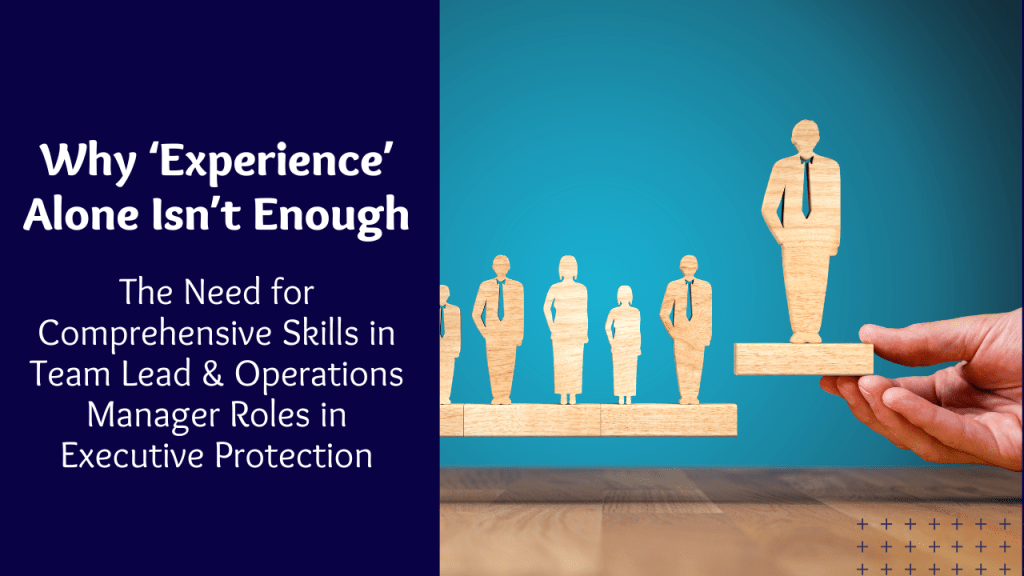
Why ‘Experience’ Alone Isn’t Enough

The Need for Comprehensive Skills in Team Lead & Operations Manager Roles in Executive Protection

We see a lot of articles and posts that address the issues with executive protection agents or what skills are needed and how one should perform as a member of the team. But we rarely see an article that clearly addresses the issues concerning those in positions such as a team leader, security manager or operational director. While its always easy to blame the boots on the ground, it’s important to see and address the issues concerning those who are managing them.

Primarily, we see leadership positions held by people who have just left (Yes, that’s correct, just left) the employ of the ‘Three-letter’ agencies, military, or in some cases, people who have been heavily involved in the industry as EP agents for a number of years. As you can understand, there’s every reason why the first group are, quite often, the best choice for such roles. So today we will discuss the second group, and why the EP industry today, demands more from its leaders than just experience in the field.

We all know that positions like Team Leaders (TLs), Security Managers, or Operations Managers play an important role in ensuring the success of protection teams and client satisfaction, and why holding  one of these positions is not just about having a “higher role” (and payrate). However, a recurring issue in the industry is that many individuals ascend to these roles solely based on time served as EP agents, security guards, military service, law enforcement, or other security-related positions. While such backgrounds may seem at first to provide a strong foundation, they are insufficient on their own to support the multifaceted challenges a leadership position entails. Being a good soldier, having a great arrest record as a police officer or K9 handler, or having been an EP agent for ‘X’  amount of time, doesn’t automatically translate that you are a great fit for a leadership position.

Leadership roles have critical needs that go beyond their past experience, and they require additional skills and training in diverse domains. The consequences of neglecting professional growth in these areas can result in complications such as poor hiring decisions, misaligned role assignments, and inadequate team management. You will be amazed to realize how many times a failure wasn’t so much the fault of the lowly agent, but primarily due to the people in those leadership positions above them.

The Problem with Experience-Only Leadership

Experience in the military, law enforcement or other security related roles, often instill discipline, situational awareness, and tactical skills, qualities that are valuable in executive protection. However, these experiences (or the time you spent in the career) may not translate to effective leadership or operational management in a corporate or private security setting. Here’s why:

  • Inability to Define the Right Candidate for the Job

Many TLs, Security Managers, and Operations Managers lack the skills to create detailed job profiles for hiring. Instead of matching the best candidate to the job’s requirements, they often try to tailor the job to fit the skills of candidates they personally favor. They often default to selecting individuals with similar backgrounds as theirs or their generalized security experience. They overlook key factors such as soft skills, specialized training, and the ability to adapt to the diverse requirements that the client needs or wants. And even more detrimental, there are many cases of managers and detail leaders who find the resume or background of a highly qualified candidate to be intimidating and/or feel challenged by their respective experience and remove them from the list of qualified applicants. While the industry seems to always be complaining about the “quality” of agents, no one appears to be complaining about who did or didn’t hire them for the client in the first place! The best ‘fit’ for the task is not always on the task…

  • Challenges in Role Assignment

Even after hiring, many leaders fail to continue to assess their team members’ individual strengths and weaknesses. Each agent brings specific skills to the table, yet instead of assigning them to roles that align with their expertise, such as surveillance detection, client interactions, or working with children, they often assign tasks indiscriminately. This approach leads to inefficiency, mistakes and decreased team morale. While it can sometimes be challenging to identify the best role for an individual, leaders should be open to reassigning team members. If a placement doesn’t work, avoid forcing it and instead, reassign them to a different position. Leaders must be willing to experiment and refine roles until each team member is in a position that maximizes their value within the team. Try to maintain a long-term mindset. Role assignments are not static; they should evolve as agents grow in their careers and as team needs change.

It is also important to create a culture where team members feel comfortable discussing their strengths, preferences, and areas where they excel. This insight can be invaluable when deciding role assignments. In addition, when assigning roles, think beyond individual skills and consider how team members will interact. The right mix of personalities and expertise can significantly enhance overall team effectiveness…And the wrong combination can be its downfall.

  • Lack of Professional Empathy

Good and effective leaders must be able to balance operational demands with the well-being of their team. Unfortunately, history has shown us that 9 out of 10 in leadership positions don’t particularly care about their team. This can come about  because they are not aware of what it takes to be the agent on the ground, or because of their own past experiences in very much different environments. They expect their agents to work overtime (mostly without being paid for it) or handle unreasonable workloads without considering the impact on their wellbeing and operational performance. It still baffles us that many do not seem to grasp the fact that if you overwork your agents, their attention to detail and their reaction time to incidents will suffer significantly. And we all know how important these two areas are for a protective detail!

Some will even go to extra lengths to ask the agents to do duties that are outside their scope of work, because they do not want to “inconvenience” their clients by making proper demands. And we have found out, instead of standing up for their teams, they are terrified to speak to their clients. They allow their ‘Boots on the Ground’ (who are the most important part of any security detail) to be abused and mistreated, instead of doing what their job calls for, which is to be the go-between and make sure the team has what is needed and that they are all being taken care of.

And for those reasons, this is the type of additional training, skills, and mindset critical for such roles:

Leadership and Management Training: Leadership courses can teach skills like conflict resolution, team building, and emotional intelligence. Leaders who can inspire trust and foster a positive team culture are more likely to achieve long-term success.

-Human Resource Management: Training in hiring practices and personnel management is crucial for selecting the right candidates and building a well-rounded team. Leaders should learn how to conduct behavioral interviews, assess qualifications, and identify red flags during the recruitment process.

-Operational Planning and Logistics: Advanced training in operational planning can help leaders create efficient schedules, optimize resources, and assign roles based on individual expertise. This ensures that every team member contributes their best to the mission.

-Empathy and Emotional Intelligence: Leaders must cultivate professional empathy—understanding their team’s needs, limitations, and aspirations. This includes setting reasonable work hours, recognizing accomplishments, and providing support during challenging assignments.

When TLs and Operations Managers possess well-rounded skill sets, the entire team and client benefits.

A leader with HR skills can build a diverse and competent team, ensuring that each member contributes unique strengths to the operation. By aligning team members with tasks that match their expertise, leaders can enhance efficiency and job satisfaction.

A leader who shows empathy and prioritizes work-life balance, fosters loyalty and motivation, leading to better performance and lower turnover. When the team operates seamlessly under skilled leadership, clients receive a higher level of service, strengthening the organization’s reputation.

The roles of TLs, Security Managers, and Operations Managers in executive protection are too critical to be entrusted to someone whose value is solely based on some specific skillset unrelated to the role. While some backgrounds can be valuable, they must be complemented by additional training and skills in leadership, human resources, operational planning, and empathy. Only then can these leaders effectively hire, manage, and deploy their teams, ensuring operational success and client satisfaction.

For the EP industry to continue evolving, it’s time to prioritize comprehensive development for those in leadership positions. This is not just a recommendation—it’s a necessity for the future of executive protection.

#ExecutiveProtection #LeadershipDevelopment #SecurityManagement #SecurityOperations #RiskManagement #TeamLeadership #CorporateSecurity #SecurityTraining #TeamLeader #ProtectionSpecialist #CrisisManagement

Identifying Suspicious Behavior: Essential Pre-Attack Indicator Training for Executive Protection Agents

An article by Bob Duggan, Founder & President, Executive Security International

Senior executive protection professionals will all agree that the number one goal when performing protective details is to prevent a threatening or embarrassing situation before it becomes a reality for your client. Now, we all know that the majority of EP schools are highly invested in the ‘’cool guy skills’’. They spend hundreds of hours training in martial arts, firearms, evasive driving, etc. While those skills are important for anyone involved in the executive protection industry, we should not forget that equally important are the skills that will provide these agents with the necessary knowledge and tools of how to prevent a threatening situation.

Identifying suspicious person in a crowd

After more than 6 decades in this profession and having taught thousands of students, I can never highlight enough how important it is to have the ability to identify suspicious behaviors and clues to dangerousness. It is safer for both the client and the security team if the agents have a more proactive mindset rather than a reactive one. We all know by experience,  and from the hundreds of case studies, that no matter how skilled you are in martial arts or how great of a sharpshooter you are, when the moment comes and you have to respond to an attack, it doesn’t matter how many bad guys you can fight or shoot, or how fast or skillful you can drive. Because at that moment, the result of the fight will be determined by many factors other than your skills in fighting or shooting. How an attack toward your client will end depends on numerous variables such as the method of attack, the number of attackers, how well equipped they are, what kind of weaponry they are using, the attack area or “The X”, and most importantly, each one of the EP team member’s mental preparations to respond. Remember, the bad guys have done their homework, and they know your weak spots, and how and when to attack. So, they do have the upper hand in the surprise. Always keep in mind…They only have to get it right once…You have to get it right all the time.

And let’s not forget that while you are fighting or shooting publicly in the open, your client is quite exposed, could be seriously harmed, and will undoubtedly be scared emotionally for life! The fact that you could not foresee and/or plan to prevent a situation that put them at such risk is considered a failure. So, wouldn’t it be safer for everyone, and your job, to be able to prevent a threat instead of merely reacting to it? Again, the senior executive protection professionals will say over and over that the best protective details are not those based on force, numbers, or use of firearms, but those based on foreseeing an upcoming threat or embarrassing situation and preventing it. In the highly demanding and fast-changing world of protective details, the difference between a secure environment and a potentially dangerous situation is purely based on the agents’ ability to preemptively recognize and respond to suspicious behavior.

For more than 4 decades, at Executive Security International (ESI) we have been teaching thousands of students behavioral intelligence and how to identify clues to dangerousness. In simple words, we have been educating them on how to understand an attacker’s behavior, what are pre-attack indicators, and how to identify clues to dangerousness and suspicious behaviors.

Pre-Attack Indicators – Clues to Dangerousness

Pre-attack indicators are specific behaviors or actions that precede an attack, or illegal/bad act, and can serve as a warning to the observant protection agent that something wrong is going to take place. These indicators can vary widely but often include unusual patterns of body movements, facial expressions, gaze, overt interest in security measures, or attempts to breach the personal boundaries of the protectee. In the milliseconds prior to an attack, human predators quite often assume the physical features of apex predator animals as they close in on their prey/target. Being able to identify and understand these indicators requires the proper training on behavioral clues and a psychological insight into the mindset of potential attackers.

“Reading suspicious behavior”

One may ask, “Is it possible and easy to read others? Especially when it comes down to suspicious behavior?” Based on scientific evidence and real-life incidents, we can testify that it is possible and if trained properly, it is easy to do so. As with all skills, being able to read others and the environment around you requires constant training and good observation skills. After all, we can’t process the information we don’t see, correct?

Humans are emotional creatures, and what they feel (anger, fear, stress, happiness, embarrassment, etc.) can be seen through their body language or facial expressions. We can all tell why a child who is confronted by his parents is hiding his hands behind his body, or why some people are pacing back and forth in a hospital waiting room. In the same way, you can learn to identify suspicious behaviors and stop an attack before it takes place by simply observing peoples’ behavior, like someone who is going to commit an attack, either a suicide bomber or an attacker. They will display either stress, fear that they may be caught and fail their mission, or be under the influence of drugs. Being taught how these emotions are expressed through body movements and facial expressions can help you identify clues to dangerousness.

After the Manchester Arena terrorist attack that shook British society and the whole world, one of the event security guards, Kyle Lawler, said that the terrorist was reported by a member of the public who, he himself thought the person looked ‘’dodgy’’, and one of Showcase’s stewards also had a look at the terrorist minutes before he detonated his bomb. As Lawler continued with his testimony to the police, and according to The Guardian article, we read that:

“As Ali (Showcase steward) turned to have a look he’s (the terrorist) clocked that we are looking at him. He’s become fidgety with his hands. No sudden movements. He was watching us, watching him.“He would kind of look, slightly look away and look back at us.”In his statement to police, Lawler said: “I just had a bad feeling about him but did not have anything to justify that.”He said Abedi was “fidgety and sweating” and he said he panicked slightly and was “conflicted” because he thought something was wrong but could not put his finger on it, the inquiry heard.”

What we see in this horrific incident is that at least three people were aware of a suspicious presence/behavior. A member of the public who saw “something wrong” reported it to a security guard and an event steward. According to the description, we see a very usual behavior by someone who is going to do something bad. “He’s become fidgety with his hands” because he was stressed, “He would kind of look, slightly look away and then look back at us” because he wanted to make sure he wasn’t caught or somebody had spotted him, and he was “fidgety and sweating”, because he was showing signs of stress.

Looking at the last statement made by the security guard, he found a specific behavior wrong, and he felt conflicted because he didn’t know how to interpret it. Here again we see the importance of training Executive Protection professionals (and anyone related to the security industry) behavioral intelligence and clues to dangerousness. The sad part of this situation is that three people, without training, spotted something they knew was wrong and if they had been trained properly, they would have known why something looks wrong and how to deal with it. Perhaps, in this particular case, the outcome would have been significantly different with quite a lower number of casualties.

Another incident, definitely worth mentioning and studying is that of the on-camera assassination of Russian ambassador to Tukey, Andrey Karlov, who was shot dead at an Ankara gallery by a Turkish policeman who wanted to protest Russia’s involvement in the Syrian war. By watching the video, one can see the clear pre-attack indicators of the assassin, minutes before he starts shooting. For those of you who have seen the video, we invite you to watch it again and this time pay attention to the following findings:

  • His pacing in the background shows signs of stress.
  • When he stands still his feet are planted wider than his shoulder’s width which shows a person who is ready to get physically engaged.
  • He has interlocked his fingers with his thumbs touching each other which shows an elevated level of stress.
  • He touches his jacket frequently, which is a sign of soothing movement.
  • He is also seen to be checking his firearm. And at one point, beginning to go for the firearm, he regrets it and seconds later he touches his face, which is another sign of stress. Blood is gathering around the mouth and nose area.
  • His face shows contempt, which is very frequent with terrorists.

A significant point to also consider is that he was an off-duty officer, showing up at an event he had no business attending, and being in close contact, was somehow allowed to place himself behind the victim in a live event. This in combination with the rest of the signs should have been a big red flag for what was about to unfold.

politician greeting crowd

The majority of the assassinations, terrorist attacks, and other physical attacks, could have been prevented if security personnel were trained in how to identify clues to dangerousness. Effective protective operations are those where the agents anticipate potential scenarios and prepare accordingly, rather than merely reacting to events as they unfold. The role of an executive protection agent is more about preventing incidents than it is about responding to them.

We started implementing our studies and experience, on behavioral intelligence and body language, into our Executive Security International’s executive protection courses since the mid 80’s. From the early days of my career, I have been fascinated by, and at the forefront of exploring how, someone’s body language and movements within a crowd can serve as crucial indicators of intent, in particular, nefarious intent to harm our clients. After years of protecting celebrities and high-net-worth families, both abroad and in the U.S., my observations led me to investigate and study further about body language and microexpression clues and how, by observing them, one can identify suspicious behavior.

In 1985, I came across the groundbreaking work and research of Dr. Paul Ekman, whose studies on facial expressions and emotions deepened my understanding of deception detection. Although Ekman’s research wasn’t directly linked to aggression, it convinced me that trained observers/executive protection agents could spot the pre-indicators of assault and guide these agents toward strategies of preemptive intervention and therefore, prevention.

It’s important to highlight here that much of today what training institutions teach security personnel about situational awareness (SA) seems to be superficial. Five years ago, we realized that in practice, SA terminology often means the agent is merely waiting for something to happen. Still, many use ‘Situational Awareness’ as a reactive intervention strategy, which leads to late reactions, resulting in client harm or embarrassment. It is crucial for anyone interested in learning more about this field to understand that, while observing behavioral cues is critical, the key is to preemptively engage by confronting the Person of Interest (POI) through soft entry or hard contact. Preemptive Intervention now means engaging the POI, communicating with team members, and seeking a resolution before any actual contact with the client. Going back to our reference on the Manchester Arena terrorist attack, if the security guard was trained in how to engage with a suspicious person for that “first interview”, most likely he would have gotten a good idea that there was something wrong that needed to be reported and investigated further BEFORE that person/visitor could proceed further into the event facility. We will analyze this method in a topic that we will develop in depth in our next article.

Today, when we talk and teach about Behavioral Intelligence, Clues to Dangerousness and Predator Hunting/Preemptive Intervention in our ESI classes, we teach with knowledge that is backed up with both real-life experience and thorough research since the early 80’s. We are very passionate about this topic because we genuinely believe in its highly proactive approach. The skill to read behavioral clues has been tested and it has been proven that it works, and the ability to “read others and the environment around you” remains the cornerstone of effective security and protective measures.

Bob Duggan

Founder & President

For those interested in learning more about behavioral intelligence and clues to dangerousness, please visit www.esibodyguardschool.com