The Missing Link in Executive Protection: Why Protective Intelligence Services Matter More Now Than Ever

Those who have been in the business for some time will tell you that executive protection is 90% about preventing threats and only 10% about responding to them. Preparation is key when it comes to protective details, and while physical security measures, highly trained agents, luxury vehicles, and advanced equipment are all critical components of any operation, one often-overlooked asset can mean the difference between proactive protection and reactive response: protective intelligence services.

We can all agree that the world is rapidly changing, and with it, so are the threats, how they materialize, and the individuals behind them. The ways in which hostile actors can reach and harm your clients are constantly evolving. A bodyguard today must consider and prepare for risks and threats that are significantly different from those of 15 or 20 years ago. The digital age has given criminals, stalkers, and hostile actors new tools to track, target, and attack high-profile individuals.  

Protective details are often perceived by the public as a purely physical profession, standing guard outside a client’s hotel room, escorting them from point A to point B, and responding to immediate threats. However, in reality, there is far more happening behind the scenes. A successful protective detail involves more than just the agents’ strength or combat skills. A security team that relies solely on reactive methods rather than proactive strategies is doomed to fail. If your protective team lacks the critical foresight needed to anticipate threats, avoid danger, and prepare before a situation escalates, failure is inevitable and failure in this industry can mean human loss, physical harm, asset loss, or reputational damage.

If you ask executive protection (EP) agents how often they have been provided with necessary protective intelligence by the companies that hired them, the majority will likely tell you they haven’t, unless they worked for a major corporation that either invested in its own intelligence division or sourced intelligence from a third party.

The reality is that most security firms neglect to integrate intelligence gathering and analysis into their protective operations, often citing cost concerns or client unwillingness to fund such capabilities. This short-sighted approach leaves agents in the field operating in a vacuum, exposed to a variety of dangers, limiting their ability to anticipate threats, assess risks, and make informed decisions that could prevent an incident before it happens. These security providers fail to recognize that protective intelligence is now a fundamental part of executive protection, just as advances, risk assessments, and threat assessments are (or at least, should be, for those still neglecting these basics). Intelligence should not be provided only if the client requests it; rather, it must be an integral part of every protective detail.

The Role of Protective Intelligence in Executive Protection Settings

Decades ago, intelligence services were primarily associated with government agencies and large corporations. However, today, with advancements in technology and access to open-source information, intelligence can be integrated into organizations of any size, whether small or large.

Consider this scenario: Your protective team has taken all necessary steps to keep your client’s dinner meeting at an A-list restaurant safe and confidential. They even booked the reservation under an alias. However, another customer at the restaurant recognizes your client and tweets on X, “Guess who’s having dinner at our restaurant?” followed by #YourClientsName.

Now, the location of your client’s dinner is public knowledge, rapidly spreading across X and other social media platforms. Meanwhile, your executive protection (EP) team still believes the visit is confidential, unaware that the client’s whereabouts have been exposed. This is critical information they should have in order to take precautions and act accordingly. But without protective intelligence services, they wouldn’t even know the exposure had occurred.

Now, let’s consider another scenario. One of your clients is on a business trip, staying at a hotel. Nearby, a protest is forming and moving closer to the hotel. As a security provider, you would want to advise your client to stay put until the situation stabilizes. But again, without intelligence services monitoring such developments, you wouldn’t have the necessary information to take proactive measures and you would ignorantly move your client into harm’s way.

Why Intelligence Matters in Executive Protection

Executive protection is not just about reacting to threats, it’s about preventing them from occurring in the first place. This is where protective intelligence plays a crucial role. While general intelligence involves gathering and analyzing information across various domains, protective intelligence is a specialized discipline focused on identifying, assessing, and mitigating threats before they materialize into real dangers.

Many executive protection teams rely solely on physical security measures, such as bodyguards, armored vehicles, and surveillance equipment. However, without an intelligence-driven approach, these teams are operating in the dark, reacting to threats as they unfold rather than anticipating, mitigating, avoiding, and/or neutralizing them ahead of time.

The Role of Protective Intelligence

Protective intelligence serves as the foundation of proactive security. It enables security teams to:

Identify Threats Before They Become a Problem – Protective intelligence involves continuous monitoring of potential threats, including hostile actors, criminal activity, cyber threats, and geopolitical risks. This allows security teams to take preemptive measures rather than relying on last-minute reactions.

Enhance Situational Awareness – Protective intelligence provides real-time updates on crime trends, civil unrest, and other evolving security threats in locations where clients are traveling or staying. This helps protection teams make informed decisions, adjusting routes and security plans as needed.

Mitigate Risks Through Social Media Monitoring – We live in a digital world and many threat actors use social media to track, expose, or target high-profile individuals. Protective intelligence includes monitoring online threats, identifying potential leaks of a client’s location, and flagging concerning activity before it escalates into a real-world risk.

Support Advance Work and Security Planning – Before a client arrives in a city/country location, at a venue, hotel, or meeting location, protective intelligence ensures comprehensive site assessments. Intelligence analysts vet the security of these locations, identifying potential risks and enabling teams to establish backup plans in case of emergencies.

Provide a Strategic Advantage to Executive Protection Teams – Without protective intelligence, bodyguards and security teams are left to react to threats in real time, often with limited information. With intelligence, they gain a strategic advantage, allowing them to operate proactively and avoid unnecessary risk exposure.

While executive protection agents are considered the last line of defense,  intelligence services can extend their protective reach beyond the immediate environment as they can provide:  

  • Location-based and Situation-based risk assessments – Evaluating crime rates, political instability, and recent incidents at destinations.
  • Live threat alerts – Real-time updates on emerging dangers such as civil unrest, roadblocks, or suspicious individuals.
  • Pre-mission planning – Conducting advances on venues, hotels, and travel routes to preempt potential risks.

Why Small Firms Avoid Intelligence Services

However, despite its undeniable value, or how many will seek education on the topic, many executive protection firms only integrate protective intelligence when a client specifically requests it, and they can charge for it. This is a highly flawed approach because protective intelligence should not be seen as an optional service to add on, but it must be a core component of every security detail!  

A team that operates without intelligence is only providing half of the protection necessary to keep a client safe. In contrast, a security team equipped with protective intelligence is proactive, informed, and always one step ahead of potential threats. The reality is that many small executive protection companies skip intelligence capabilities because they often function on tight budgets and want to prioritize the most visible security measures which are bodyguards, vehicles, and sometimes surveillance equipment without realizing that intelligence is the very foundation upon which these elements should be deployed.

However, waiting for a client to demand intelligence services before integrating them into a security operation is fundamentally flawed. A security company should be advising the client on what is necessary, not the other way around. And when the client does not wish to pay for it, then what? You should have it as part of the services you provide in order to prepare and equip your agents best. The reluctance to invest in intelligence is a classic case of reactive security planning instead of proactive threat mitigation and that comes with a cost.  

The cost of ignoring the use of protective intelligence is exposing themselves to unnecessary risk and liability. A single incident, whether it’s an ambush, a targeted attack, an embarrassing situation, or even a travel or meeting disruption, can severely damage a company’s reputation, not to mention endanger lives and assets. On the other hand, an intelligence-driven approach enhances the professionalism of a firm and gives clients a reason to trust in the protective measures they provide.

Again, consider this scenario: A protective team is escorting an executive to a conference in a foreign city. Without intelligence, they are unaware that the hotel is located near an area experiencing political protests. A sudden outbreak of violence places the client and the team at risk. With an intelligence component, this risk would have been identified in advance, and an alternative plan could have been executed.

Making Protective Intelligence a Standard, Not an Option

Security firms must begin treating protective intelligence services as a standard part of their operations, not an add-on that only high-budget clients receive. Even small firms can develop intelligence capabilities by:

  • Hiring or outsourcing intelligence analysts who can provide actionable insights.
  • Using open-source intelligence (OSINT) to monitor real-time threats.
  • Using technology and proper AI-driven tools to track risk factors across different regions.
  • Training security personnel to integrate intelligence into their daily routines.

Prevention can be more effective than reaction, considering the fact the enemy holds the element of surprise and chooses when, where and how. The primary goal of a protective team is to be able to detect when, where and how and take proactive actions to prevent attacks.  

Protective Intelligence services allow for:
-Early threat detection – Monitoring and identifying potential threats before they become direct dangers.
-Predictive risk analysis – Understanding patterns of criminal activity, protests, or hostile surveillance.
-Strategic planning – Knowing the safest routes, venues, and contingency plans in advance.

An intelligence-informed protective team doesn’t just protect, it ensures their client never even faces the threat in the first place. Protective intelligence should not be seen as merely an expense but an investment in the effectiveness and credibility of a security detail. The most successful executive protection teams are those that blend physical security with actionable intelligence, ensuring they stay ahead of threats instead of merely reacting to them. When a protective team has access to protective intelligence, they elevate their role from a “security presence” to a “security strategist.”

It is time for executive protection companies, especially the smaller firms, to rethink their approach. Intelligence is not a luxury; it is an operational necessity that must be built into every protective detail, regardless of client expectations. If the goal is truly to protect, then intelligence must be at the core of every mission.

Chris Grow, Managing Partner, LeMareschal LLC

”Giving Back The Stage” Project – Presenting Christina Lekati

This has been a project I have wanted to do for a long time. As a woman in the security industry, I have had the pleasure and the honor to have worked alongside some amazing female professionals from different parts of the world and security fields. Personally, I have been blessed with my networking contacts, developments, and public exposure. I feel like I owe a lot of my brand’s success to my relationship with my network and other colleagues.

That is why I have decided to “Give Back the Stage” to a different woman every month. Women don’t tend to be very public about their stories, their achievements, and their struggles. So every month, I will be using the power of my networking platforms and connections to promote and bring awareness to a specific female in the security sector. My goal is to help them grow their own brands, connections, and publicity by showing their stories and sharing them with my network and contacts. I learned a long time ago that success comes not only from hard work, dedication, and keeping my standards up, but also from having the right connections. And what these connections taught me is that sometimes by simply asking, you will be given an answer, some much-needed help, a tip, a new introduction, and sometimes, even a job offer.

Please join me in this effort and welcome these women, invite them to your professional network and reach out to them if their services align with what your organization or clients may need. If you know a woman who must be on this “Stage”, please reach out to me and send me a recommendation.

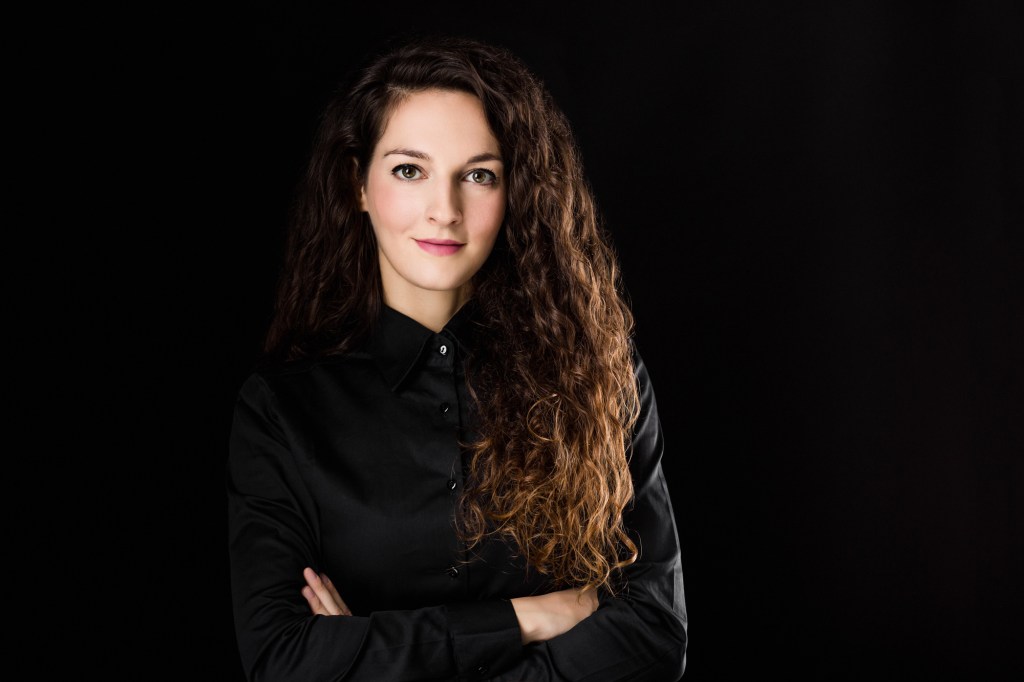
The woman to whom I am giving the Stage for this month is Christina Lekati. Now many are not aware that I am the child of first-generation immigrants who moved to Greece in 1991. So, with Christina, we don’t share only our psychology studies, but also we share the same language (Greek) and were raised in the same country. When I started my first steps in Executive Protection in Greece back in 2002, security was something new, not to mention females in the industry which were almost nonexistent. It is a pleasure and an honor to see more women from Greece doing so well and have expanding their careers in other countries as well.

Christina is a psychologist with a long history in the field of cybersecurity. Being raised by a cybersecurity expert, she came in contact with the bright and dark sides of the internet from a very young age. Growing up, she got involved in projects that were often beyond her age, giving her an edge in her own knowledge and understanding of cybercrime.

Before long, Christina had identified that social engineering security was a very intriguing field for her. Her calling was to help as many people as possible protect themselves from scammers, fraudsters, or more sophisticated social engineers. Her background and degree in psychology helped her understand the mechanisms of behavior, motivation, and decision-making, but also manipulation and deceit. It also helped her break down, analyze, and better understand the steps attackers use when they target humans and the psychological triggers they use. She found out that all of us have universal psychological tendencies and weaknesses that threat actors exploit on a regular basis. However, each of us has individual triggers that an attacker can identify and exploit in tailored attack scenarios. She applied all those learnings in her work with Cyber Risk GmbH where she serves as the main developer of the social engineering training programs. Those programs intertwine the lessons learned from real-life cases and previous experiences with the fields of cybersecurity, psychology, and counterintelligence.

However, there is another element that interplays in defending any individual or organization from cyber threat actors. That is Christina’s second passion: open-source intelligence (OSINT). She has been also running the Open-Source Intelligence (OSINT) vulnerability assessments for organizations or high-value targets through Cyber Risk GmbH.

Being committed to sharing knowledge and helping others, Christina is an active Advisory Board Member at the OSINT Curious project, contributing to the international scene of Open Source Intelligence (OSINT) with the latest news, updates, and techniques on collection and analysis. The OSINT Curious Project is a source of quality, actionable, open-source intelligence news, original blogs, instructional videos, and live streams. They try to keep people curious about exploring web applications for bits of information or trying out new techniques to access important OSINT data.

Due to her work and insights on social engineering attacks and open-source intelligence, Christina is frequently invited as a speaker to cyber security events and conferences. Among others, she has presented at the SANS OSINT Summit, SEVillage at DEF CON, and Hacktivity and keynoted several cybersecurity events around the globe. She has also been interviewed, featured, or provided articles in major German newspapers, including “Der Spiegel”, “Die Zeit”, “TAZ”, and the Heise magazines.

If you represent an organization and are interested in learning more about defending against social engineering and the psychological elements involved in human hacking, send her a message on LinkedIn. If you are organizing an event and would like to invite her as a speaker, reach out to Christina for a presentation or speech. For those of you in the security industry who want to learn more about the fascinating world of OSINT, social engineering, and Cybersecurity, you can follow Christina’s articles on Medium and Linkedin.

#christinalekati #osint #osintcurious #cybersecurity #cyberdefense #socialengineering #psychology #sansosintproject #cybercrime #counterintelligence #osinttraining #humanhacking #givingbackthestage #givingbackthestageproject #executiveprotection #closeprotection #securityservices #securitycompany #securityprofessionals #securitymanagement #socmint #femaleempowerment #linkedinthoughtleader #womeninsecurity #femalebodyguards #thoughtleadership #networking

Russian Oligarchs Keep Getting In Troubles by Instagram Selfies

In our latest interview with expert Nick Barreiro, Chief Forensic Analyst of Principle Forensics, we discussed the security risks from any/all social media platform postings and how someone can obtain critical information from your pictures. If you haven’t watched the interview yet, please find it below

According to Vice’s latest article, authorities have been following Instagram profiles of the women related to, or involved with, Russian oligarchs to obtain information about them, their holdings, accounts, and locate assets to seize/freeze by merely identifying and following the weakest link who posts the most. These women who act like ”influencers” or social media celebrities are looking for publicity, but they now represent a significant threat to the security of the individuals they’re around and expose them to unwanted scrutiny. ”Oligarchs themselves rarely use Instagram to accidentally crack open a window into their high living. Rather, it’s the people partying with them: A stepdaughter, an ex-wife, or in the least one infamous case, an escort.” Read the full article here.

”Stop posting pictures with your clients or from your security details” An interview with Nick Barreiro, Chief Forensic Analyst of Principle Forensics

Our interview with Nick Barreiro, Chief Forensic Analyst of Principle Forensics is available online. It was a pleasure, for us, to have this opportunity to discuss with Nick the ever popular subject of ”Don’t post pictures from your details, business trips or your clients and their ‘toys”. A subject that has been brought up for discussion hundreds of times and by many diverse colleagues, and even today there seems to be two categories: Those who say there is nothing wrong with it and it causes no threat or harm, and those who are against it and have been preaching it for years. Our new subject matter expert is a certified Audio/Video Forensic Analyst and the founder of Principle Forensics and he discussed with us how easy it is for someone to draw valuable information from your online posts, videos, audio, or pictures. We talked about photography risks, audio/video risks, discreet investigations involving recorded evidence, and why the issue is still critical even if you have the client’s permission to post your pictures with him or the fact that you have stopped working for said client. Nick will welcome any questions but he is not on social media so if you have a question for him to answer, you can email us and we will forward it and follow up with you. He has also offered to do a second interview where we can open it up to participants who can ask questions. So, if you are interested, let us know.

The importance of educating Security Personnel and Intelligence Analysts about biases

Bias is a topic that many industries like to avoid, and the security and intelligence industries are no exception. However, there is a profound need to discuss biases in regard to the security industry and when educating security practitioners and intelligence analysts. When the subject of biases has been raised in the past, the majority of commentators cannot seem to agree, in fact, they will often argue against the existence of biases and/or why there is a need to discuss them in the first place. In this article, we would like to address the topic of bias – what bias is, who has biases, whether are biases wrong, and what types of biases there are. Then, we will highlight WHY it is important for security professionals and intelligence analysts to be able to identify their biases and address them, and, then, we will share HOW one can identify his/her biases.

Now before we start, there is one thing on which we can all agree: As a security professional, you don’t only make assessments about incidents or places, but also about people. Keep this in mind as we proceed further, we will come back to it.

What is bias?

To answer this, we will use the definition according to the American Psychological Association

1. partiality: an inclination or predisposition for or against something. See also prejudice.

2. any tendency or preference, such as a response bias or test bias.

3. systematic error arising during sampling, data collection, or data analysis. See biased estimatorbiased sampling.

4. any deviation of a measured or calculated quantity from its actual (true) value, such that the measurement or calculation is unrepresentative of the item of interest. —biased adj.

There are a few keywords from the definition — predisposition, against, tendency, preference”. Keep those words in mind when thinking about how they affect the threat assessment of a security professional. While you do that, think of a scenario when a security guard has to assess, either by observation or by interviews, any visitors in the area for which he/she is responsible. That security guard believes that women are less likely to commit a crime (bias) and, during his/her threat assessment, he/she misses the fine details that a woman is, in all actuality, a terrorist. You think perhaps this couldn’t occur? Well, it has actually happened. In July 2017 in Mosul, a female suicide bomber, holding her child in her arms, managed to walk by security guards and detonate her bomb.

The security guards, instead of being observant and watching her hands (in which she was holding the detonator), just saw a mother with her child. Many people see women as weak and incapable of committing acts of terror, especially one who is carrying her own child. This is not the only incident when the ‘’miscalculation of threat or of threat actors’’ was catastrophic.

(A woman suicide bomber walks past soldiers, the trigger in her right hand (Al-Mawsleya TV)

Photo by fauxels on Pexels.com

Do all people have biases?

Before we answer that, ask yourself, “Are there people, things, or ideas you like better than others? Are there places/events where you feel more comfortable than others?” We are sure your answer to these questions is “yes” and that is because all humans have biases. Some biases are passed to us through evolution and some are learned through socialization and/or direct experience. One must understand that biases serve a purpose. Simply put, because the human brain has the tendency to categorize information, people, events, experiences, etc. during his/her learning and development process, the brain will connect the new information and people to past experiences. Once that is done, the brain will respond to it in the same way it does to other things belonging to that same category. So, by putting people with similar traits into a specific category, one believes that everyone else in that category must be the same. Biases are not limited to race, gender, ethnicity, religion, social or political groups but many characteristics may be subjected to one’s biases such as physical appearance, sexual orientation, educational level, profession, etc.

Are biases wrong and racist?

When discussed, the majority of people tend to disregard biases, believing that even acknowledging those biases will label them as racists. The first mistake when talking about biases is when someone considers someone else good or bad based on his/her biases.

According to Matt Grawitch, PhD ‘’Biases make decision-making easier by giving us a starting point, an initial prediction, or a “leaning of the mind” regarding which choice to make. We anchor our original judgment in the biased conclusion and then adjust it based on supplemental information.’’

Having biases is not necessarily bad, wrong, or racist. In fact, we’ve discussed that biases improve the decision-making process and help the human brain to categorize new information. We could say that since biases help us simplify information processing, they basically function as rules of thumb that help us make sense of what is happening around us and make faster decisions.

However, biases can become bad and even dangerous when we treat or judge someone unfairly or when the accuracy of the decision is of the utmost importance, such as behaviour or threat assessment. In addition, what can make a bias shift from ok to “bad” is when an individual allows their biases to influence their decision-making process in such a way that they allow those biases to affect someone else in a negative fashion by either being unfair or causing a miscalculation in the threat level.

Not being able to recognize and address our biases can lead to neglecting or discounting information that would be valuable for our job functions. Information that we process and use to make decisions can directly affect a risk/threat and vulnerability assessment, an interview with a suspect, the analysis of intelligence and data, or the use of link analysis in putting together an intelligence report. In these situations, biases can become a systematic thinking error that can cloud our judgment, and, as a result, impact our decisions, thus rendering our final product limited or even useless. 

What types of biases do people have?

People can have conscious biases (biased attitudes toward specific ideologies, events, groups of people, etc. that we are aware of) or unconscious biases (biases we are not aware of, cannot control, are difficult to access, and can quite often influence our actions more than conscious biases).

In one of her articles, Kendra Cherry mentions that ‘’some of our cognitive biases are related to memory. The way you remember an event may be biased for a number of reasons and, that in turn, can lead to biased thinking and decision-making. Other cognitive biases might be related to problems with attention. Since attention is a limited resource, people have to be selective about what they pay attention to in the world around them.’’

If you are aware of a biased attitude, it is more likely and consciously possible for you to be able to address it during your decision-making process. However, unconscious biases are the most ‘’dangerous” ones since it often takes specific training and study of yourself to be able to identify that you have them. Here, Carly Hallman is listing 50 types of unconscious biases. Have a look and see how one or more of them can affect your decision-making process.

  1. Fundamental Attribution Error: We judge others on their personality or fundamental character, but we judge ourselves on the situation.
  2. Self-Serving Bias: Our failures are situational, but our successes are our responsibility.
  3. In-Group Favoritism: We favor people who are in our in-group as opposed to an out-group.
  4. Bandwagon Effect: Ideas, fads, and beliefs grow as more people adopt them.
  5. Groupthink: Due to a desire for conformity and harmony in the group, we make irrational decisions, often to minimize conflict.
  6. Halo Effect: If you see a person as having a positive trait, that positive impression will spill over into their other traits. (This also works for negative traits.)
  7. Moral Luck: Better moral standing happens due to a positive outcome; worse moral standing happens due to a negative outcome.
  8. False Consensus: We believe more people agree with us than is actually the case.
  9. Curse of Knowledge: Once we know something, we assume everyone else knows it, too.
  10. Spotlight Effect: We overestimate how much people are paying attention to our behavior and appearance.
  11. Availability Heuristic: We rely on immediate examples that come to mind while making judgments.
  12. Defensive Attribution: As a witness who secretly fears being vulnerable to a serious mishap, we will blame the victim less if we relate to the victim.
  13. Just-World Hypothesis: We tend to believe the world is just; therefore, we assume acts of injustice are deserved.
  14. Naïve Realism: We believe that we observe objective reality and that other people are irrational, uninformed, or biased.
  15. Naïve Cynicism: We believe that we observe objective reality and that other people have a higher egocentric bias than they actually do in their intentions/actions.
  16. Forer Effect (aka Barnum Effect): We easily attribute our personalities to vague statements, even if they can apply to a wide range of people.
  17. Dunning-Kruger Effect: The less you know, the more confident you are. The more you know, the less confident you are.
  18. Anchoring: We rely heavily on the first piece of information introduced when making decisions.
  19. Automation Bias: We rely on automated systems, sometimes trusting too much in the automated correction of actually correct decisions.
  20. Google Effect (aka Digital Amnesia): We tend to forget information that’s easily looked up in search engines.
  21. Reactance: We do the opposite of what we’re told, especially when we perceive threats to personal freedoms.
  22. Confirmation Bias: We tend to find and remember information that confirms our perceptions.
  23. Backfire Effect: Disproving evidence sometimes has the unwarranted effect of confirming our beliefs.
  24. Third-Person Effect: We believe that others are more affected by mass media consumption than we ourselves are.
  25. Belief Bias: We judge an argument’s strength not by how strongly it supports the conclusion but how plausible the conclusion is in our own minds.
  26. Availability Cascade: Tied to our need for social acceptance, collective beliefs gain more plausibility through public repetition.
  27. Declinism: We tend to romanticize the past and view the future negatively, believing that societies/institutions are by and large in decline.
  28. Status Quo Bias: We tend to prefer things to stay the same; changes from the baseline are considered to be a loss.
  29. Sunk Cost Fallacy (aka Escalation of Commitment): We invest more in things that have cost us something rather than altering our investments, even if we face negative outcomes.
  30. Gambler’s Fallacy: We think future possibilities are affected by past events.
  31. Zero-Risk Bias: We prefer to reduce small risks to zero, even if we can reduce more risk overall with another option.
  32. Framing Effect: We often draw different conclusions from the same information depending on how it’s presented.
  33. Stereotyping: We adopt generalized beliefs that members of a group will have certain characteristics, despite not having information about the individual.
  34. Outgroup Homogeneity Bias: We perceive out-group members as homogeneous and our own in-groups as more diverse.
  35. Authority Bias: We trust and are more often influenced by the opinions of authority figures.
  36. Placebo Effect: If we believe a treatment will work, it often will have a small physiological effect.
  37. Survivorship Bias: We tend to focus on those things that survived a process and overlook ones that failed.
  38. Tachypsychia: Our perceptions of time shift depending on trauma, drug use, and physical exertion.
  39. Law of Triviality (aka “Bike-Shedding”): We give disproportionate weight to trivial issues, often while avoiding more complex issues.
  40. Zeigarnik Effect: We remember incomplete tasks more than completed ones.
  41. IKEA Effect: We place higher value on things we partially created ourselves.
  42. Ben Franklin Effect: We like doing favors; we are more likely to do another favor for someone if we’ve already done a favor for them than if we had received a favor from that person.
  43. Bystander Effect: The more other people are around, the less likely we are to help a victim.
  44. Suggestibility: We, especially children, sometimes mistake ideas suggested by a questioner for memories.
  45. False Memory: We mistake imagination for real memories.
  46. Cryptomnesia: We mistake real memories for imagination.
  47. Clustering Illusion: We find patterns and “clusters” in random data.
  48. Pessimism Bias: We sometimes overestimate the likelihood of bad outcomes.
  49. Optimism Bias: We sometimes are over-optimistic about good outcomes.
  50. Blind Spot Bias: We don’t think we have bias, and we see it on others more than ourselves.

WHY must security professionals and intelligence analysts address bias training?

As a security professional or intelligence analyst, seeing what biases are and how they can significantly affect us, do you see how important it is to recognize and address them during the decision-making process? Do you see how biases can affect your risk and threat assessment, information gathering and analysis as well as behavioral assessment while you are conducting a first interview with a visitor, suspicious person, etc.?

We will give you an example. During the Manchester arena attack investigation, one of the security guards claimed that he did feel something was “off” with one of the terrorists but he was uncertain of how to approach and ask questions (first interview of a suspect) because he was afraid he was going to be labeled a “racist’’.

Being trained in how to recognize and address your biases will not only help you to make a better decision but will also give you peace of mind and confidence knowing that you are approaching and properly interviewing a person whose presence seems to be unjustified and/or suspicious. You will be able to clearly gather more information and assess the risk without feeling that you are merely racially profiling that person. You will also build more awareness of the subjects with which you hold biases and that awareness will lead to more choices. More choices will lead to a more ‘’open mind’’ and allow you to seek further information before you make a decision.

In connection to why biases and the training on them are important and related to the security industry, we must mention here Richard Gasaway, Ph.D, the creator of the Center for the Advancement of Situational Awareness and Decision making, has highlighted the fact that ‘’Confirmation bias is particularly challenging to situational awareness because it can prohibit the uptake of critical clues and cues that can foretell impending doom.’’

Now that we have discussed the many aspects of biases, what they are, and how they can affect your decision-making process do you want to test yourself and find out what biases you have? You can use one of the many online tests available, the Implicit Association Test (IAT) created by Harvard.

This will help you assess and better identify all that biases you or your staff may have that can affect risk and threat assessments as well as intelligence gathering and analysis. In addition, your staff’s performance and how they interact with others to make sure their decision-making will be as accurate as can be ascertained from the information provided and not just from their own personal biases.

If you are an individual interested in receiving training in biases or you represent an organization looking to train your employees in this very much needed and important topic, please reach out to us.

Chris Grow

AUS Global Special Services Travel Team

Managing Partner LeMareschal LLC

Denida Zinxhiria Grow

Founder & CEO

Athena Worldwide & Nannyguards

Managing Partner LeMareschal LLC