The Missing Link in Executive Protection: Why Protective Intelligence Services Matter More Now Than Ever

Those who have been in the business for some time will tell you that executive protection is 90% about preventing threats and only 10% about responding to them. Preparation is key when it comes to protective details, and while physical security measures, highly trained agents, luxury vehicles, and advanced equipment are all critical components of any operation, one often-overlooked asset can mean the difference between proactive protection and reactive response: protective intelligence services.

We can all agree that the world is rapidly changing, and with it, so are the threats, how they materialize, and the individuals behind them. The ways in which hostile actors can reach and harm your clients are constantly evolving. A bodyguard today must consider and prepare for risks and threats that are significantly different from those of 15 or 20 years ago. The digital age has given criminals, stalkers, and hostile actors new tools to track, target, and attack high-profile individuals.  

Protective details are often perceived by the public as a purely physical profession, standing guard outside a client’s hotel room, escorting them from point A to point B, and responding to immediate threats. However, in reality, there is far more happening behind the scenes. A successful protective detail involves more than just the agents’ strength or combat skills. A security team that relies solely on reactive methods rather than proactive strategies is doomed to fail. If your protective team lacks the critical foresight needed to anticipate threats, avoid danger, and prepare before a situation escalates, failure is inevitable and failure in this industry can mean human loss, physical harm, asset loss, or reputational damage.

If you ask executive protection (EP) agents how often they have been provided with necessary protective intelligence by the companies that hired them, the majority will likely tell you they haven’t, unless they worked for a major corporation that either invested in its own intelligence division or sourced intelligence from a third party.

The reality is that most security firms neglect to integrate intelligence gathering and analysis into their protective operations, often citing cost concerns or client unwillingness to fund such capabilities. This short-sighted approach leaves agents in the field operating in a vacuum, exposed to a variety of dangers, limiting their ability to anticipate threats, assess risks, and make informed decisions that could prevent an incident before it happens. These security providers fail to recognize that protective intelligence is now a fundamental part of executive protection, just as advances, risk assessments, and threat assessments are (or at least, should be, for those still neglecting these basics). Intelligence should not be provided only if the client requests it; rather, it must be an integral part of every protective detail.

The Role of Protective Intelligence in Executive Protection Settings

Decades ago, intelligence services were primarily associated with government agencies and large corporations. However, today, with advancements in technology and access to open-source information, intelligence can be integrated into organizations of any size, whether small or large.

Consider this scenario: Your protective team has taken all necessary steps to keep your client’s dinner meeting at an A-list restaurant safe and confidential. They even booked the reservation under an alias. However, another customer at the restaurant recognizes your client and tweets on X, “Guess who’s having dinner at our restaurant?” followed by #YourClientsName.

Now, the location of your client’s dinner is public knowledge, rapidly spreading across X and other social media platforms. Meanwhile, your executive protection (EP) team still believes the visit is confidential, unaware that the client’s whereabouts have been exposed. This is critical information they should have in order to take precautions and act accordingly. But without protective intelligence services, they wouldn’t even know the exposure had occurred.

Now, let’s consider another scenario. One of your clients is on a business trip, staying at a hotel. Nearby, a protest is forming and moving closer to the hotel. As a security provider, you would want to advise your client to stay put until the situation stabilizes. But again, without intelligence services monitoring such developments, you wouldn’t have the necessary information to take proactive measures and you would ignorantly move your client into harm’s way.

Why Intelligence Matters in Executive Protection

Executive protection is not just about reacting to threats, it’s about preventing them from occurring in the first place. This is where protective intelligence plays a crucial role. While general intelligence involves gathering and analyzing information across various domains, protective intelligence is a specialized discipline focused on identifying, assessing, and mitigating threats before they materialize into real dangers.

Many executive protection teams rely solely on physical security measures, such as bodyguards, armored vehicles, and surveillance equipment. However, without an intelligence-driven approach, these teams are operating in the dark, reacting to threats as they unfold rather than anticipating, mitigating, avoiding, and/or neutralizing them ahead of time.

The Role of Protective Intelligence

Protective intelligence serves as the foundation of proactive security. It enables security teams to:

Identify Threats Before They Become a Problem – Protective intelligence involves continuous monitoring of potential threats, including hostile actors, criminal activity, cyber threats, and geopolitical risks. This allows security teams to take preemptive measures rather than relying on last-minute reactions.

Enhance Situational Awareness – Protective intelligence provides real-time updates on crime trends, civil unrest, and other evolving security threats in locations where clients are traveling or staying. This helps protection teams make informed decisions, adjusting routes and security plans as needed.

Mitigate Risks Through Social Media Monitoring – We live in a digital world and many threat actors use social media to track, expose, or target high-profile individuals. Protective intelligence includes monitoring online threats, identifying potential leaks of a client’s location, and flagging concerning activity before it escalates into a real-world risk.

Support Advance Work and Security Planning – Before a client arrives in a city/country location, at a venue, hotel, or meeting location, protective intelligence ensures comprehensive site assessments. Intelligence analysts vet the security of these locations, identifying potential risks and enabling teams to establish backup plans in case of emergencies.

Provide a Strategic Advantage to Executive Protection Teams – Without protective intelligence, bodyguards and security teams are left to react to threats in real time, often with limited information. With intelligence, they gain a strategic advantage, allowing them to operate proactively and avoid unnecessary risk exposure.

While executive protection agents are considered the last line of defense,  intelligence services can extend their protective reach beyond the immediate environment as they can provide:  

  • Location-based and Situation-based risk assessments – Evaluating crime rates, political instability, and recent incidents at destinations.
  • Live threat alerts – Real-time updates on emerging dangers such as civil unrest, roadblocks, or suspicious individuals.
  • Pre-mission planning – Conducting advances on venues, hotels, and travel routes to preempt potential risks.

Why Small Firms Avoid Intelligence Services

However, despite its undeniable value, or how many will seek education on the topic, many executive protection firms only integrate protective intelligence when a client specifically requests it, and they can charge for it. This is a highly flawed approach because protective intelligence should not be seen as an optional service to add on, but it must be a core component of every security detail!  

A team that operates without intelligence is only providing half of the protection necessary to keep a client safe. In contrast, a security team equipped with protective intelligence is proactive, informed, and always one step ahead of potential threats. The reality is that many small executive protection companies skip intelligence capabilities because they often function on tight budgets and want to prioritize the most visible security measures which are bodyguards, vehicles, and sometimes surveillance equipment without realizing that intelligence is the very foundation upon which these elements should be deployed.

However, waiting for a client to demand intelligence services before integrating them into a security operation is fundamentally flawed. A security company should be advising the client on what is necessary, not the other way around. And when the client does not wish to pay for it, then what? You should have it as part of the services you provide in order to prepare and equip your agents best. The reluctance to invest in intelligence is a classic case of reactive security planning instead of proactive threat mitigation and that comes with a cost.  

The cost of ignoring the use of protective intelligence is exposing themselves to unnecessary risk and liability. A single incident, whether it’s an ambush, a targeted attack, an embarrassing situation, or even a travel or meeting disruption, can severely damage a company’s reputation, not to mention endanger lives and assets. On the other hand, an intelligence-driven approach enhances the professionalism of a firm and gives clients a reason to trust in the protective measures they provide.

Again, consider this scenario: A protective team is escorting an executive to a conference in a foreign city. Without intelligence, they are unaware that the hotel is located near an area experiencing political protests. A sudden outbreak of violence places the client and the team at risk. With an intelligence component, this risk would have been identified in advance, and an alternative plan could have been executed.

Making Protective Intelligence a Standard, Not an Option

Security firms must begin treating protective intelligence services as a standard part of their operations, not an add-on that only high-budget clients receive. Even small firms can develop intelligence capabilities by:

  • Hiring or outsourcing intelligence analysts who can provide actionable insights.
  • Using open-source intelligence (OSINT) to monitor real-time threats.
  • Using technology and proper AI-driven tools to track risk factors across different regions.
  • Training security personnel to integrate intelligence into their daily routines.

Prevention can be more effective than reaction, considering the fact the enemy holds the element of surprise and chooses when, where and how. The primary goal of a protective team is to be able to detect when, where and how and take proactive actions to prevent attacks.  

Protective Intelligence services allow for:
-Early threat detection – Monitoring and identifying potential threats before they become direct dangers.
-Predictive risk analysis – Understanding patterns of criminal activity, protests, or hostile surveillance.
-Strategic planning – Knowing the safest routes, venues, and contingency plans in advance.

An intelligence-informed protective team doesn’t just protect, it ensures their client never even faces the threat in the first place. Protective intelligence should not be seen as merely an expense but an investment in the effectiveness and credibility of a security detail. The most successful executive protection teams are those that blend physical security with actionable intelligence, ensuring they stay ahead of threats instead of merely reacting to them. When a protective team has access to protective intelligence, they elevate their role from a “security presence” to a “security strategist.”

It is time for executive protection companies, especially the smaller firms, to rethink their approach. Intelligence is not a luxury; it is an operational necessity that must be built into every protective detail, regardless of client expectations. If the goal is truly to protect, then intelligence must be at the core of every mission.

Chris Grow, Managing Partner, LeMareschal LLC

Identifying Suspicious Behavior: Essential Pre-Attack Indicator Training for Executive Protection Agents

An article by Bob Duggan, Founder & President, Executive Security International

Senior executive protection professionals will all agree that the number one goal when performing protective details is to prevent a threatening or embarrassing situation before it becomes a reality for your client. Now, we all know that the majority of EP schools are highly invested in the ‘’cool guy skills’’. They spend hundreds of hours training in martial arts, firearms, evasive driving, etc. While those skills are important for anyone involved in the executive protection industry, we should not forget that equally important are the skills that will provide these agents with the necessary knowledge and tools of how to prevent a threatening situation.

Identifying suspicious person in a crowd

After more than 6 decades in this profession and having taught thousands of students, I can never highlight enough how important it is to have the ability to identify suspicious behaviors and clues to dangerousness. It is safer for both the client and the security team if the agents have a more proactive mindset rather than a reactive one. We all know by experience,  and from the hundreds of case studies, that no matter how skilled you are in martial arts or how great of a sharpshooter you are, when the moment comes and you have to respond to an attack, it doesn’t matter how many bad guys you can fight or shoot, or how fast or skillful you can drive. Because at that moment, the result of the fight will be determined by many factors other than your skills in fighting or shooting. How an attack toward your client will end depends on numerous variables such as the method of attack, the number of attackers, how well equipped they are, what kind of weaponry they are using, the attack area or “The X”, and most importantly, each one of the EP team member’s mental preparations to respond. Remember, the bad guys have done their homework, and they know your weak spots, and how and when to attack. So, they do have the upper hand in the surprise. Always keep in mind…They only have to get it right once…You have to get it right all the time.

And let’s not forget that while you are fighting or shooting publicly in the open, your client is quite exposed, could be seriously harmed, and will undoubtedly be scared emotionally for life! The fact that you could not foresee and/or plan to prevent a situation that put them at such risk is considered a failure. So, wouldn’t it be safer for everyone, and your job, to be able to prevent a threat instead of merely reacting to it? Again, the senior executive protection professionals will say over and over that the best protective details are not those based on force, numbers, or use of firearms, but those based on foreseeing an upcoming threat or embarrassing situation and preventing it. In the highly demanding and fast-changing world of protective details, the difference between a secure environment and a potentially dangerous situation is purely based on the agents’ ability to preemptively recognize and respond to suspicious behavior.

For more than 4 decades, at Executive Security International (ESI) we have been teaching thousands of students behavioral intelligence and how to identify clues to dangerousness. In simple words, we have been educating them on how to understand an attacker’s behavior, what are pre-attack indicators, and how to identify clues to dangerousness and suspicious behaviors.

Pre-Attack Indicators – Clues to Dangerousness

Pre-attack indicators are specific behaviors or actions that precede an attack, or illegal/bad act, and can serve as a warning to the observant protection agent that something wrong is going to take place. These indicators can vary widely but often include unusual patterns of body movements, facial expressions, gaze, overt interest in security measures, or attempts to breach the personal boundaries of the protectee. In the milliseconds prior to an attack, human predators quite often assume the physical features of apex predator animals as they close in on their prey/target. Being able to identify and understand these indicators requires the proper training on behavioral clues and a psychological insight into the mindset of potential attackers.

“Reading suspicious behavior”

One may ask, “Is it possible and easy to read others? Especially when it comes down to suspicious behavior?” Based on scientific evidence and real-life incidents, we can testify that it is possible and if trained properly, it is easy to do so. As with all skills, being able to read others and the environment around you requires constant training and good observation skills. After all, we can’t process the information we don’t see, correct?

Humans are emotional creatures, and what they feel (anger, fear, stress, happiness, embarrassment, etc.) can be seen through their body language or facial expressions. We can all tell why a child who is confronted by his parents is hiding his hands behind his body, or why some people are pacing back and forth in a hospital waiting room. In the same way, you can learn to identify suspicious behaviors and stop an attack before it takes place by simply observing peoples’ behavior, like someone who is going to commit an attack, either a suicide bomber or an attacker. They will display either stress, fear that they may be caught and fail their mission, or be under the influence of drugs. Being taught how these emotions are expressed through body movements and facial expressions can help you identify clues to dangerousness.

After the Manchester Arena terrorist attack that shook British society and the whole world, one of the event security guards, Kyle Lawler, said that the terrorist was reported by a member of the public who, he himself thought the person looked ‘’dodgy’’, and one of Showcase’s stewards also had a look at the terrorist minutes before he detonated his bomb. As Lawler continued with his testimony to the police, and according to The Guardian article, we read that:

“As Ali (Showcase steward) turned to have a look he’s (the terrorist) clocked that we are looking at him. He’s become fidgety with his hands. No sudden movements. He was watching us, watching him.“He would kind of look, slightly look away and look back at us.”In his statement to police, Lawler said: “I just had a bad feeling about him but did not have anything to justify that.”He said Abedi was “fidgety and sweating” and he said he panicked slightly and was “conflicted” because he thought something was wrong but could not put his finger on it, the inquiry heard.”

What we see in this horrific incident is that at least three people were aware of a suspicious presence/behavior. A member of the public who saw “something wrong” reported it to a security guard and an event steward. According to the description, we see a very usual behavior by someone who is going to do something bad. “He’s become fidgety with his hands” because he was stressed, “He would kind of look, slightly look away and then look back at us” because he wanted to make sure he wasn’t caught or somebody had spotted him, and he was “fidgety and sweating”, because he was showing signs of stress.

Looking at the last statement made by the security guard, he found a specific behavior wrong, and he felt conflicted because he didn’t know how to interpret it. Here again we see the importance of training Executive Protection professionals (and anyone related to the security industry) behavioral intelligence and clues to dangerousness. The sad part of this situation is that three people, without training, spotted something they knew was wrong and if they had been trained properly, they would have known why something looks wrong and how to deal with it. Perhaps, in this particular case, the outcome would have been significantly different with quite a lower number of casualties.

Another incident, definitely worth mentioning and studying is that of the on-camera assassination of Russian ambassador to Tukey, Andrey Karlov, who was shot dead at an Ankara gallery by a Turkish policeman who wanted to protest Russia’s involvement in the Syrian war. By watching the video, one can see the clear pre-attack indicators of the assassin, minutes before he starts shooting. For those of you who have seen the video, we invite you to watch it again and this time pay attention to the following findings:

  • His pacing in the background shows signs of stress.
  • When he stands still his feet are planted wider than his shoulder’s width which shows a person who is ready to get physically engaged.
  • He has interlocked his fingers with his thumbs touching each other which shows an elevated level of stress.
  • He touches his jacket frequently, which is a sign of soothing movement.
  • He is also seen to be checking his firearm. And at one point, beginning to go for the firearm, he regrets it and seconds later he touches his face, which is another sign of stress. Blood is gathering around the mouth and nose area.
  • His face shows contempt, which is very frequent with terrorists.

A significant point to also consider is that he was an off-duty officer, showing up at an event he had no business attending, and being in close contact, was somehow allowed to place himself behind the victim in a live event. This in combination with the rest of the signs should have been a big red flag for what was about to unfold.

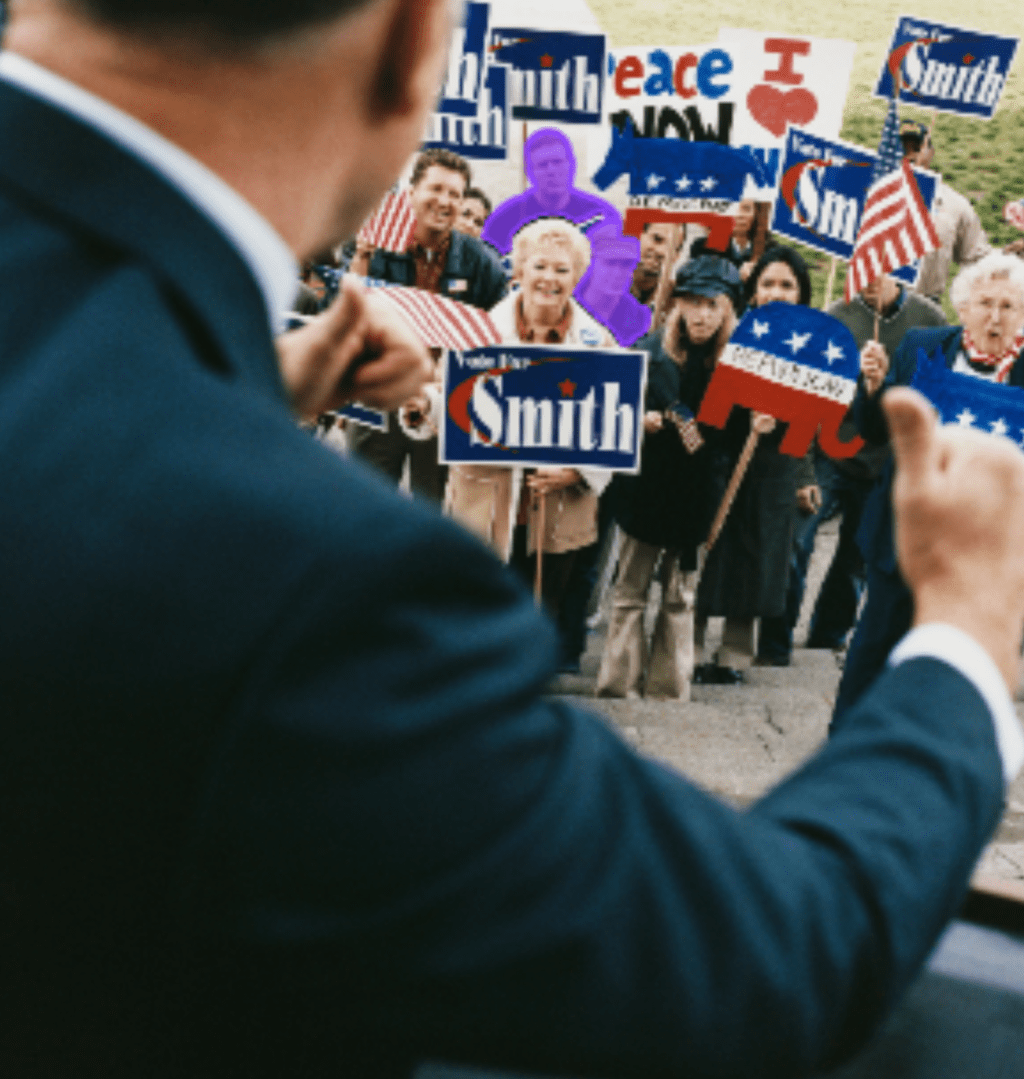
politician greeting crowd

The majority of the assassinations, terrorist attacks, and other physical attacks, could have been prevented if security personnel were trained in how to identify clues to dangerousness. Effective protective operations are those where the agents anticipate potential scenarios and prepare accordingly, rather than merely reacting to events as they unfold. The role of an executive protection agent is more about preventing incidents than it is about responding to them.

We started implementing our studies and experience, on behavioral intelligence and body language, into our Executive Security International’s executive protection courses since the mid 80’s. From the early days of my career, I have been fascinated by, and at the forefront of exploring how, someone’s body language and movements within a crowd can serve as crucial indicators of intent, in particular, nefarious intent to harm our clients. After years of protecting celebrities and high-net-worth families, both abroad and in the U.S., my observations led me to investigate and study further about body language and microexpression clues and how, by observing them, one can identify suspicious behavior.

In 1985, I came across the groundbreaking work and research of Dr. Paul Ekman, whose studies on facial expressions and emotions deepened my understanding of deception detection. Although Ekman’s research wasn’t directly linked to aggression, it convinced me that trained observers/executive protection agents could spot the pre-indicators of assault and guide these agents toward strategies of preemptive intervention and therefore, prevention.

It’s important to highlight here that much of today what training institutions teach security personnel about situational awareness (SA) seems to be superficial. Five years ago, we realized that in practice, SA terminology often means the agent is merely waiting for something to happen. Still, many use ‘Situational Awareness’ as a reactive intervention strategy, which leads to late reactions, resulting in client harm or embarrassment. It is crucial for anyone interested in learning more about this field to understand that, while observing behavioral cues is critical, the key is to preemptively engage by confronting the Person of Interest (POI) through soft entry or hard contact. Preemptive Intervention now means engaging the POI, communicating with team members, and seeking a resolution before any actual contact with the client. Going back to our reference on the Manchester Arena terrorist attack, if the security guard was trained in how to engage with a suspicious person for that “first interview”, most likely he would have gotten a good idea that there was something wrong that needed to be reported and investigated further BEFORE that person/visitor could proceed further into the event facility. We will analyze this method in a topic that we will develop in depth in our next article.

Today, when we talk and teach about Behavioral Intelligence, Clues to Dangerousness and Predator Hunting/Preemptive Intervention in our ESI classes, we teach with knowledge that is backed up with both real-life experience and thorough research since the early 80’s. We are very passionate about this topic because we genuinely believe in its highly proactive approach. The skill to read behavioral clues has been tested and it has been proven that it works, and the ability to “read others and the environment around you” remains the cornerstone of effective security and protective measures.

Bob Duggan

Founder & President

For those interested in learning more about behavioral intelligence and clues to dangerousness, please visit www.esibodyguardschool.com 

Russian Oligarchs Keep Getting In Troubles by Instagram Selfies

In our latest interview with expert Nick Barreiro, Chief Forensic Analyst of Principle Forensics, we discussed the security risks from any/all social media platform postings and how someone can obtain critical information from your pictures. If you haven’t watched the interview yet, please find it below

According to Vice’s latest article, authorities have been following Instagram profiles of the women related to, or involved with, Russian oligarchs to obtain information about them, their holdings, accounts, and locate assets to seize/freeze by merely identifying and following the weakest link who posts the most. These women who act like ”influencers” or social media celebrities are looking for publicity, but they now represent a significant threat to the security of the individuals they’re around and expose them to unwanted scrutiny. ”Oligarchs themselves rarely use Instagram to accidentally crack open a window into their high living. Rather, it’s the people partying with them: A stepdaughter, an ex-wife, or in the least one infamous case, an escort.” Read the full article here.

Social Media Investigations and Monitoring for Risk Mitigation Purposes

The use of social media and the way it affects our lives and businesses have brought a new challenge to the security industry and the protective team’s responsibility. It gives the entire world the ability to look into people’s lives with the mere push of a button. Scandals are created, secrets exposed, and lives ruined. In the case of personal security, social media can be used in the advancement of a protective detail; however, one must know how to utilize it properly. Today, we will talk about Social Media Investigations and Monitoring. For those who are not aware of the term, as we utilize it in protection circles, Social Media Investigation and Monitoring is the process by which you can identify what is being said about your clients, a brand they represent, or the corporations with which they are involved and any threats or dangers that may exist in relation to those aspects.

As we sift through different social media platforms and online channels, we must then determine if what is being said has any significance regarding your clients’ reputation, persona, and safety and if there is the need to mitigate any risks. In other words, it’s like setting up an online, social media “net”. This process then helps you discover everything that is being said, written about, or portrayed on social media and determine its relevance to your clients. You can gather information about the ‘’public opinion’’ surrounding your clients, about people or entities who are angry with them for one reason or the other, people who are obsessed with them, or people who are making online threats. SOCMINT or Social Media Intelligence (not to be confused with OSINT) has seen a huge rise in necessity due to the use of social media and a competent protective detail needs to always be informed and social media investigations and monitoring are a huge part of this process. 

Now, let’s see some examples of how social media investigations and monitoring applies in protective services. Let’s say one of the people you are protecting belongs to a large pharmaceutical company and they decided to raise the price of a specific drug, thus affecting the lives and wellbeing of thousands of people. Perhaps another client is involved in a financial institution that quite suddenly makes a significant decision that affects people’s lifetime savings and pensions. You can imagine that there will be a significant number of people who become very angry, and some may want to harm your client. During the recent pandemic, there were a number of “anti-vaxx” groups that were quite vocal and utilized Facebook as one of their many platforms to accomplish their goals. Another example would be the need to discover if there is someone using your client’s name or company to scam others and commit crimes.

We are sure that many of you today are aware of the infamous ‘’Tinder Swindler’’, Shimon Yehuda Hayut, who legally changed his name to Simon Leviev to pretend to be the son of the billionaire Lev Leviev and used his name and company logos to scam people. Although his actions were known since 2017, it was only after the airing of the Netflix documentary in 2022 that the Leviev family found out and filed a lawsuit against Hayut for falsely portraying himself as the son of Lev Leviev, receiving benefits, and committing crimes.

According to Leviev’s family attorney, Guy Ophir, they will now include anyone who has attempted to make a profit from his scam during the next lawsuit. What we can ask is, as security providers, why didn’t someone from the real Leviev family ever discover this scam artist who was extremely public and active on social media as the ‘’son of Lev Leviev’’? Although the real family members were never part of this fraudulent scheme, and it didn’t appear to affect their safety, it did, however, involve their name/brand in a very public and negative way. In other words, it should have definitely been considered as a threat to their reputation. Other people who were harmed by this scam artist were the businesses who did work with them, and their secondary service providers as well. 

Another interesting case to mention is Elon Musk where he, the actual client, took it upon himself to “solve” the issue and directly contacted the person of interest who had begun posting his private flight details and created the security risk for him and was literally blackmailing him unless the POI was paid. According to media reports “Elon Musk states social-media accounts that track his travel movements are ‘becoming a security issue.” Tail numbers and yacht names of billionaires are increasingly being shared on online platforms and one can track them by having the appropriate app unless significant efforts are made to secure them from the reach of those diligent few. These are some unique specific details that the security team needs to pay close attention to at all times.

Photo by Asad Photo Maldives on Pexels.com

Since Social Media platforms are the way people today communicate with each other, we as security providers must keep in mind that this is not always a positive aspect. Perhaps a person or persons will utilize social media to collectively gather people with their same goal or mission, to get together and plan their next move (Example: protesting outside your client’s house or corporation). In this case, you will want to know what is being said online about the person you protect to determine if there is something of extreme necessity to include in your risk and threat assessment and then take protective measures as well as inform their legal department.

As we have all witnessed too many times, it only takes one well-placed picture or story regarding some alleged activity on the part of your client, and it will go viral quickly, truth or not. Staying one step ahead of this type of “attack” has become a crucial necessity in order to protect your client from embarrassment or exposure. One of the most common issues in recent history is when personnel close to the client i.e., family, staff, vendors, and any other secondary customers post pictures, stories, or opinions and subsequently fail to understand the negative effect these types of communications can and will have on the client’s life, business, and the lives of their loved ones.

Why do you need a Social Media Investigations and Monitoring Strategy when you are a security services provider? To summarize we can say:  

1) To identify new threats. 

2) To discover what information about your client is posted online either by himself, the ones close to him, or his employees and evaluate how these affect his safety. 

3) To evaluate a threat (someone is posting online threats directed at your client).

4) To add to your due diligence.

5) To geolocate a picture or a video, sometimes even audio. 

6) To include any findings in your Risk and Threat Assessment (We can never highlight this enough, social media surveys and investigations are now a critical part of your Risk and Threat Assessments).

7) To find people obsessed with or following your clients (stalkers).

8) To identify hate groups or terrorist organizations that may affect your client.

9) To identify people or businesses your client may or may not want to do business with.

10)To mitigate risks from the information found online about the person you protect (How are the pictures of my client used or tampered with and for what purpose?).

11)To identify if someone is impersonating your client or a family member.

12)To find out if your client’s moves/visits/travels are posted online (Exposing them to others who may be in the same hotel, conference room, restaurant). 

13)To identify workplace violence or insider threat indicators.

14)To find out what is the ‘’public opinion’’ regarding your client (Always keep an eye on what is being said about your client and have a strategy to respond). 

15)To determine if a person or persons are utilizing your client’s name or business name in a malicious or unauthorized manner for their own personal gain. (Claiming associations or partnerships, etc.)

How to perform Social Media Monitoring for security purposes? 

First, let’s clarify one important thing. ‘’Googling it’’ is not enough, nor is it the answer. There are a number of search sites that allow for user input thus watering down or contaminating information and it’s accuracy. For those who are not aware, Social Media Investigations and Monitoring is quite a different department of protective services and quite often falls under Intelligence Analysis and Open-Source Intelligence. It requires unique skills and knowledge. One must clearly understand different social media and research platforms and how to use each one of them (and/or in combination) to obtain information. How you will approach each case is different and certainly depends on who your client is, their business, close relations, and/or their public image. This will directly affect the searches and the resources used and for what purpose. It is vital in our current day and age to include SOCMINT (Social Media Intelligence) in your client’s service proposal, no matter how public the person may or may not be. Hiring ten Executive Protection agents and a Residential Security Team is not enough anymore. SOCMINT services are a vital part of your Risk and Threat Assessments (Dynamic Risk Assessments too) and enable your protective detail to function more efficiently. 

For those who can not provide a certified Social Media Investigator for their clients, follow up with these steps:

1)Understand who your client is, his/her background, the threats, where do they stand in political, social, financial sectors.

2)Be aware of any of the latest changes in your clients’ lifestyle, public opinions, and professional decisions. 

3)Be aware of any of their political and social changes. Watch the news from multiple channels. 

4)Familiarize yourself with all close family, friends, staff, and associates and their respective social media footprints.

5)Set up a social media investigation and monitoring strategy. 

6)Have a good understanding of the Intelligence Cycle (How the intel is being collected, analyzed, disseminated, reviewed, etc.).

7)Have a good understanding of the search tools on different platforms (Facebook, Twitter, Instagram, TikTok, LinkedIn, Tumblr, Reddit, etc.) 

8)Do research on the available search engines and the strengths and limitations each one may have. 

9)Know how to conduct image, video, and audio research and gather intelligence from them.

10)Invest in appropriate platforms for social media investigations and monitoring (Have in mind, NEVER rely on one platform’s result or just platforms’ results. The user/investigator is the main component of a social media investigation). 

11)Download and use appropriate search engine extensions and apps. 

12)Invest time in creating ‘’sock puppets’’ or fake profiles and maintain their persona. Sometimes you may need a profile to have access to different forums or groups without being discovered.

13)Train yourself in link analysis (How to look for connections between people, events, and organizations).

14)Set keyword alerts (In multiple languages in case your client has ties with more than one country).

15)Gather, analyze, evaluate, and report your findings to the appropriate department or leadership.  

Photo by Lisa Fotios on Pexels.com

As the threat landscape changes every day, we as protection providers must be able to adapt and keep ourselves up to date with additional training. Today’s executive protection agent must also be skilled and knowledgeable in investigations, open-source intelligence, protective intelligence, HUMINT, and have an increased understanding of cyber security. Large corporations have already created their own embedded intelligence departments, while others are hiring threat analysts and OSINT investigations from outside security providers. The rise of protective intelligence, and whatever that includes, is here to stay and we are seeing it more and more through the highly increased number of related job postings every day. 

If you are an Executive Protection Agent and want to learn more on how to utilize Social Media Investigations and Monitoring for Risk Mitigation Purposes, reach out to us.

f you are a service provider and want to add Social Media Investigations and Monitoring for Risk Mitigation Purposes on your service list, contact us to learn about our vendor services. 

Chris Grow

AUS Global Special Services Travel Team

Managing Partner LeMareschal LLC

Denida Grow

Founder & CEO

Athena Worldwide 

Nannyguards

Managing Partner LeMareschal LLC

Mentoring Security Professionals

We will be launching a series of educational webinars that are absolutely free to attend. The aim of the webinars won’t be to present people and their past stories, but to have specific guests who will combine their experience and training in the industry in order to teach you something new, to help your professional development and to provide consultation for you. They will share their opinions, the “do and don’ts” of the industry and answer your questions.

And the best part? The content of each webinar will be developed by you! While we are working on our next webinars, let us know either by a comment here or via email at info@lemareschal.com what topics would you be interested in having discussed, answered and/or receive consultation on? This is a webinar created for you, by you!

Executive Protection Agents in a Rare Interview with a Retired Paparazzi

It’s not very often when we have the ability to interview and learn from our adversaries. While most efforts are seemingly focused only on physical attacks, they do not give enough emphasis to the paparazzi, media, and all that this facet of protection entails. But we’ve got you covered. This is an interview we have been wanting to do for the last 5 years. What we learned from a retired British paparazzi is that pointing a flashlight toward them won’t work, neither you are safe if you block the tail number from your private jet. We also learned how they find information about your clients, who are willing to pay a lot of money to buy your pictures (no, it is not only the media outlets), to what length they will go to distract you and get that picture and why you will be not able to buy their silence.

*Disclaimer: During this interview, you may encounter offensive language content within the realm of your site.*

** For permission to use this video please contact info@lemareschal.com**

***Copyright @Athena Worldwide, a LeMareschal LLC company. Any illegal reproduction of this content will result in immediate legal action.***

The challenges for protecting Public Figures- The Macron Incident

The latest incident with French President Emmanuel Macron being slapped by someone in the crowd has once again fired up the keyboard warriors who take any incident (video or picture) such as this and claim how improperly the Executive Protection team functioned and what would they have done differently and, of course, be more successful. As a Greek proverb says ‘’Whoever is outside the dance (floor), can sing many songs’’ Meaning: It is easy to talk about something when you are not the one involved in it. 

As security practitioners, we must be very careful what we say online, keeping in mind, whatever you post online stays online even if you delete it minutes later. We should not criticize security details and/or the people involved because we do not know all the facts, details, limitations and the full story. When you post a comment on a 10-second video, you may not have the full story. You do not know what happened before or after the incident. What you see in a photo may not be the full picture. It doesn’t make you any more ‘’professional’’ when you try to spot the wrong moves in an incident where you weren’t involved and you do not know all the parameters: you are just assuming.

In this case, we heard many opinions:

‘’Why didn’t they keep standard formation?’’- How can you keep standard formation when your principal is anticipating close interaction with a member of the crowd? Greeting lines are extremely tedious and are one of the most difficult situations to read and provide protection.

‘’The reaction time was slow.’’- The reaction time always seems to be slower when you see an incident on a video over and over again rather than being involved with it in real-time in the field.

‘’They were lucky he wasn’t holding a knife.’’ – Actually someone did their job well and made sure he (or anyone else in the crowd) wasn’t holding a weapon. What most fail to understand is that these crowds are previously checked for anything that can be used as a weapon.

‘’Why didn’t they saw that coming?’’ – They don’t teach ESP at Executive Protection schools…

‘’Why didn’t someone teach Macron?’’ – Most protectees won’t sit down and learn from you about protection, they want you to protect them. It’s not their job to know how to do yours…Why do you think you’re employed?

Now let’s address some challenges for protecting public figures and try to make some rational sense of all of this.

Protecting people whose identity depends on the public, such as politicians, in this case, is very much different than protecting a C-Suite executive for example. A politician needs the interaction with public. They shake hands, hug, get pictures with and celebrate with large crowds. Having people like them is what makes people vote for them, and they need to look and act quite approachable to everyone in order to gain votes. If they don’t get the votes, well, then they no longer hold their current political position. They have to attend gatherings and events and most of those functions may be outside of your span of control regarding organizing it. You have to provide services as best as you can with what you have and minimize whatever limitations you can. 

In this case ‘’the unknown crowd’’ is the issue. The ‘’crowd’’ provides a good opportunity for the enemy to blend in, act and even escape in some cases. Also, as most public appearances are preplanned and announced, the enemy has the time to be prepared for the attack. And when we say attack, let’s clarify that “attack on your principal” is not only an assassination or physical harm but also an attack on his/her personality, reputation or by causing embarrassment. 

While most EP training schools focus only on physical attacks, have in mind causing embarrassing situations may be something your principal is particularly vulnerable and endangered by, thus it is something you must be prepared to prevent. Making sure the crowd has been checked for anything that can be used as a weapon doesn’t mean you are safe from an embarrassing situation. Paying attention to people’s hands and what they are carrying doesn’t mean you can be sure about the intention of a handshake. A handshake can become a pat on the shoulder or a slap on the face. How would you know the intentions of the handshake and act within 2 seconds to prevent it? You must be in very close proximity to do that and sometimes you have limitations on how close you can be with your principal, particularly when they are interacting with the public and potential voters. When any public figure decides he/she want to come within close proximity of a voter, you are required to break the standard formations and you cannot have security between the voter and the principal because they need that ‘’personal space’’.

Act too aggressive and they will perceive this position as very unapproachable, something that goes against your principal’s political campaigns. So you have limitations or adaptations to perform your protective job competently. 

Another thing to consider is that some protectees will appear uncooperative with you and your suggestions or directions. They will do the exact opposite of what you have instructed them to do or whatever the plan was because they thought doing something different was ok, safe or was suggested at the last minute by their campaign manager. Some protectees will ask you to protect them no matter what. The fact that they won’t consider changing their lifestyle, and you have to do your best, becomes another facet of the ever-evolving detail.

Have we forgotten the flying shoe incident with President Bush in a press conference in 2008? The red paint thrown at Mary Harney, Ireland’s Health Minister in November 2010? Berlusconi’s nose being broken and two teeth knocked out when a man attending a political rally threw the statuette of Milan’s Duomo gothic cathedral straight in his face in 2009? Eggs being thrown at Bill Clinton in Warsaw, Poland? Nicolas Sarkozy being a victim of a flying pie in 1997? The book thrown at Obama in 2010? The glitter attack on Minnesota Governor Tim Pawlently in 2011? Pope being attacked by a woman who jumped barriers at St Peter’s Basilica and knocked him down in 2009? The famous slap on Dimitra Liani Papandreou, the widow of ex Greek PM at her book signing by a woman who appears to be there to sign her book? Bill Gates’ “Pie-to-the-Face” fiasco? There are so many more similar incidents including paint, body fluids, pies, yoghurt, vegetables, flour and even flashing body parts such as the Femen members who went toplessness in front of the EU-Russia summit, in Brussels, in December 2012.

Can we criticize the EP team members involved in these incidents? Can we say that you would have done better after the incident has taken place? From the moment you have a complete crowd check for weapons, you are in a “secure” space. But what leads you to believe that you have a better understanding regarding the mental status of someone who appears to be a voter or a fan? Can you honestly guess his motives if he/she wants to slap, or spit or in some way embarrass your client?

If you haven’t provided security details for Public Figures, it may seem easy for you to criticize an incident like this, but criticizing what you don’t know and just assuming doesn’t make you right and it very well may show your ignorance. Instead, use this incident as a reminder that people will use anything to harm your client’s reputation and their imagination can be big and quite unpleasant. Keep it as a learning tool for yourself and yet another scenario in your head of what you would or wouldn’t do if…

Denida Grow

Managing Partner

LeMareschal LLC

Founder & CEO

Athena Worldwide

Nannyguards

Marketing tips for Executive Protection Agents

Perception is everything, protect yourself and build your reputation on solid ground.

*These are part of a panel of personal opinions formulated from my experience in the industry as an EP agent, business owner and recruiter for other corporations. Keep in mind that just because I preach it, doesn’t mean I haven’t made the mistakes. It’s actually the fact I have made some of these and it’s caused me to learn what can work and what doesn’t. You may not agree with me or follow up with the suggestions, but experience is an amazing teacher…”Let he who has ears…”*

1) Know what you know and know your value. (Know what you are willing to sacrifice as well, working more hours, night shifts, holidays, for how much, or how little.)

2) Know what you don’t know and either leave it to someone else or study it (There is nothing worse than someone who is trying to operate in many different fields, and yet, have quite limited knowledge on each field and act as though they’re the authority on it.) Focus on what you are most interested in and master it. Only move on to something else when you have a solid foundation on a topic and you are prepared to expand to something else.

3) “Listen more and talk less” Comment or post on social media only if you have something constructive to say and always stay on point and use professional language.

4) Post or comment only on subjects you know well, subjects you have studied, and subjects you know from real-life experience. There is no need to post daily or non-related posts.

5) It takes specific work and, quite simply, boots on the ground to consider yourself experienced. Having worked EP two or three days a month doesn’t make you qualified enough to disagree or raise your voice with people who have been doing this for 10+ years. Neither are you an expert after one or two years in the industry (You can always see who is who and what they know and don’t know by what they post on social media). Stay humble, lay low and learn your trade well…Your day will come.

6) Maintain a professional image on all business-related social media sites. A suit and tie picture will always be better than a tank top or a duckface selfie.

7) Build a professional LinkedIn Profile, highlight your skills and post all your professional and educational achievements.

8) Stop posting sensitive information, IDs, and license numbers on social media (You are a security professional! If you fail to protect even your own personal information, what does that tell me about how you handle your clients’ information??)

9) Always maintain OPSEC in every post you make. Always think, “How could this be used to harm my client or my team?

10) Protect your data! We have seen more and more security professionals warning their connections that they have been hacked! If your ex-girlfriend can hack your Facebook or LinkedIn profile, then you are probably not very good at keeping your clients or your information safe.

11) Keep high school drama out of social media.

12) Control your emotions, and remain professional at all times…You are your client’s close protection, NOT his/her “Buddyguard”. Friendly at all times, not Friends.

13) Be careful of your connections and the people that you recommend or work with. Have you heard of death by association? Make no mistake, it is a very real factor in our business!

14) Build a professional-looking CV. Keep it simple and to the point. There is no need to hire a CV writer, you know what you have done, trained for, and accomplished.

15) Invest time in building connections. Spend time talking to others or helping them with their projects. I have gained many contracts after the interviews I did with others.

16) Offer pro bono services to companies you respect and want to be involved with.

17) If you are single and have no family commitments, perhaps you work that shift on Christmas or other holidays so someone else can spend the day with his children. You have no idea how being understanding can help you in the long term.

18) Study your clientele and any potential clients. The industry has changed significantly, and the new wave of clients are IT gurus, app developers, cryptocurrency investors, reality stars, etc. Always be knowledgeable on current trends and topics.

19) Be informed on local and international news, threats, and events that affect the industry and the needs or operational aspects of your clients.

20) Don’t be arrogant, there is a fine line between being confident and arrogant. Never cross it…There usually is no way back once the damage is done.

Denida Zinxhiria Grow

Founder & CEO

Athena Worldwide

Athena Academy

Nannyguards

Managing Partner

LeMareschal LLC

Things to consider before you hire an Executive Protection team aka Bodyguards

 To all CEOs, celebrities, VIPs and high value individuals…

At some point in your careers, you will most likely find the need to retain, or at the very least, inquire about close protection services for yourselves, your loved ones and possibly for those you employ closest to you.
      Now, the list of companies and corporations that provide these type of services is quite lengthy and, while at first they all appear very impressive, you need to be thorough as you take a deep look at them and the ideals and morals they represent. Again, you are searching for the perfect fit that best protects yourselves, your families, employees and all things that you need secured and confidential.
      A quite disturbing trend as of late has been the repeated posting of pics with you as the client, at your locations and in front of your vehicles, private planes, residences, etc. while boasting about the details of who you might be, what was happening or other items of a secure nature. Now, this is entirely unacceptable no matter what the terms or conditions of their employment may be with you. You, and all that that may encompass, are to be secure, confidential and invisible for all intents and purposes. Period.
      Social media has become the source of all communications amongst a great number of these entities and this in turn has led to a trend of exposing enormous amounts of confidential client information when it is not only unnecessary but highly unprofessional and, frankly, childish. At times, it has even been portrayed as “marketing” when, in it’s true form, it’s nothing more than schoolyard bragging.
      So, when researching a prospective organization that you perceive may be the one you will choose, a thorough search of all related social media should be performed. The company’s sites, the reviews and even the social media sites of any/all possible employees that you might hire from their corporation. If they are willing to expose their previous clients with seemingly reckless abandon, you will most likely be the next celebrity/VIP pic that hits the Facebook/Instagram/LinkedIn circuit and that is, I’m quite sure, not your desire at all.
      Many companies will show an endless supply of “tactical” pictures, extreme condition photos, worst case scenario snapshots, etc. Please understand that most of the organizations are composed of a large number of former military members, former LEO/SWAT members and private security contractors who have “been there & done that”. But it is always wise to remember that while these skills are highly advantageous should everything go tragically wrong in your day, these type of days should never happen if the proper planning is performed which is completely above and beyond the “hard skills” as they are often referred to.
      Another highly recommended item is a detailed NDA and total social media blackout for all involved. Leave nothing to chance and be very clear regarding the seriousness that this represents to you and the severity of disciplinary action should it be violated. Again, you and all you hold most dear are to be secure, confidential and private and definitely NOT on the front page of a local newspaper, tabloid, media page or out to the highest bidder.
      Always remember this…You came looking to us with your concerns and fears, placing your overall well-being in our capable hands. With that in mind, you should always feel protected, safe and secure from anyone or anything that might wish to harm you. And that harm should NEVER be at the hands of the very people whom you have so willingly trusted to provide the very best security, protection and peace of mind.

Denida Zinxhiria Grow

Founder & CEO

Athena Worldwide

Athena Academy

Nannyguards

At Athena Worldwide we are industry leaders in promoting, training, and staffing female bodyguards internationally. With our affiliate offices, we can provide worldwide close protection and executive protection services for entertainment professionals, politicians, CEOs, Royal Families, journalists, clergy, and corporate personnel. Want to find out more about female bodyguards? visit www.athenaworldwide.com

The importance of being a responsible and safety-conscious citizen in your community

I wrote this article due to a horrible crime that took place several days ago in Greece. A 34-year-old woman returning home late at night, while unlocking the door of her apartment building, was grabbed and pulled away by a violent criminal. She was raped, beaten, doused with gasoline, and then set on fire while still alive. Despite living in a crowded neighborhood where many people heard her screaming, not a single person went out to see what was happening until it was too late. The most horrible part is that both her father and brother could hear a woman screaming, but they never thought it was their beloved family member…

The criminal, a 27-year-old, who has been accused in the past of sexual attacks by other victims, had been released back into society due to a lack of evidence to convict him. He was described as a male with strange and abusive behavior toward women, and he was stalking the victim for a long time. The blame cannot be solely shouldered by the Greek Justice and Authorities for allowing this man to continue his abusive acts, which ultimately ended the horrible murder of this woman.

I would like to raise the attention to the fact that people in today’s society fail to care about others or act to assist someone in distress. If one of the neighbors, hearing her first screams, had gone outside and yelled at the criminal or made their presence known, might have assisted in stopping the crime, which would have saved the poor woman’s life. Witnesses said they heard a woman screaming, but they were scared to go outside and see what was wrong. Several just didn’t think it was something serious enough to investigate. It must be horrible for the family members and neighbors to know they could have saved this woman’s life if they had acted instead of hiding. This lack of action will most likely haunt the community for a long time.

We are obviously not responsible for the actions of criminals within our community. However, we are accountable for our actions or lack thereof. Being a responsible citizen that cares about their neighbors can save lives. You don’t have to be the hero that will stop the crime by physically engaging the criminal. You can be the hero by just paying attention and reporting suspicious or criminal acts. Let’s think about it, maybe the victim wasn’t our sister or daughter, but if it was, wouldn’t we pray that someone would act if they heard her screams for help and react fast enough to save her? I’m sure we all would pray for that.

Leaving the comfort of your couch and going out to see what’s taking place can save people’s lives. Criminals don’t want to be captured and usually flee if confronted by witnesses. Making criminals aware that someone is watching is a powerful deterrent to their criminal activity and makes for a much safer community

.Image

Denida Zinxhiria

Founder & CEO

Athena Worldwide

Nannyguards