Keeping C-Suite Executives Safe

There have been many reported incidents surrounding violence towards C-suite executives, with the most well-known case, the murder of the tech executive Bob Lee, founder of Cash App in San Francisco, last year and the death of Vivek Taneja, who was assaulted in downtown D.C. on February 2nd and succumbed to his injuries a day later. These incidents, along with many others, bring again to light the ongoing issue with crime rates in specific areas and the potential dangers that corporate leaders may face. We can all agree that in today’s world, the safety and security of high-profile individuals, particularly C-Suite executives, has become paramount. Targeted attacks, opportunistic attacks, kidnappings, thefts, workplace violence, cyber threats, natural disasters, and active shootings are some of the frequent risks that can pose a threat to their safety.

Photo by Christina Morillo on Pexels.com

The Reality for Many Executives

One thing that the public does not know is that, unlike high-profile politicians or celebrities who often have round-the-clock security details, many C-Suite executives operate day-to-day without the constant presence of protective teams. Whether they are traveling for business, attending business meetings and conferences, or simply going about their daily routines, these individuals may find themselves exposed to various threats without the support of a security entourage. Often, the cost of their safety is not considered to be within their company’s budget, and many of them are fairly resistant to having a team of protectors consistently around them.

Opportunistic and Targeted Threats

  • Pava LaPere, a 26-year-old tech entrepreneur, was found dead on the roof of her building, half-naked, strangled, and brutally beaten with a brick. She was killed by Jason Billingsley who, having been under police surveillance for another woman’s sexual abuse, was allowed to enter the building by LaPere herself.
  • 51-year-old Forrest Hayes, the former senior director of Apple’s worldwide operations, was killed by a high-priced prostitute who injected him with a lethal dose of heroin and then left him to die on his luxury yacht.
  • In 2019, Tushar Atre was kidnapped from his own home early in the morning hours and later on found dead. He was stabbed and shot multiple times.
  • In 2022, Artemis Seaford, a high-level executive at Meta and dual US. – Greek national, was found to be surveilled by surveillance-for-hire software for around one year. Seaford was another victim of the “Greek Watergate,” for which the Greek government has been accused of spying on a number of its own citizens, including politicians, journalists, activists, and business owners.

As we know and can clearly see from multiple cases, threats can come from any direction and at any given opportunity. Those of wealth or stature in society find themselves to becoming a target or being “condemned” by groups who feel that they somehow deserve more and that their goal to achieve is best obtained through violence of some sort. We all saw how executives and personnel from pharmaceutical companies were targeted during the Covid lockdowns and how specific minorities (Asian) have been singled out for harassment recently due to the tedious stories surrounding the supposed origins of Covid as well as the tedious political arena of U.S/Chinese relations. Russian businessmen/women have become victims of various crimes against themselves, their families, assets, and companies.

Photo by Rebrand Cities on Pexels.com

How many Americans are targeted while overseas during their business or leisure trips, and how many executives are regularly targeted during company layoffs as well? While the first thing that comes to mind is the importance of preserving human lives, organizations have to also realize that any harm done to their executives and employees will have a tremendous impact on their business. The loss of the leaders in their business (the brains behind their products), the loss of their intellectual property, and the disturbance of their daily operations will cause the employees and customers to lose faith in them and they won’t feel safe within their facilities anymore.

Keeping Executives Safe

One may ask, how then can executives be safe and protected against natural disasters or physical and cyber security threats if they cannot be provided with a security team? The different attacks, the threat level, the fast social-political-geopolitical changes, and incidents that have already taken place, underscores the critical need for C-Suite executives to be better prepared and equipped with basic safety procedures and skills to ensure their well-being in the absence of dedicated protection.

Corporations have a responsibility to invest in the education and training of their executives to mitigate risks and safeguard their well-being. By providing specially designed safety training programs, companies can empower their leaders with the tools and knowledge necessary to protect themselves and make informed decisions in challenging circumstances. Not only will a safety training program benefit the individuals and organizations by saving lives, but it will also help with mitigating legal and financial risks, protecting intellectual property, protecting daily operations, improving productivity and morale, demonstrate corporate social responsibility, and enhance company’s reputation. We know that not all organizations have physical security teams for their executives. Some may not have the budget for it, and some, though the evidence is quite clear, do not see the necessity for it. However, there is a way for all businesses, big and small, to make their people safer.

Safety Educational Programs for Executives

Our team at LeMareschal has had the pleasure of conducting private classes for C-Suite executives and tech companies’ employees in the past. From our experience, we found out that many approach the training with an open mind and realize early on how much they need it, and some even say “I wish I would have done this earlier”. When you decide to provide these type of training options to this specific target group, you should consider who these people are and which environments they exist, create, and travel within.  The purpose of these training programs is to provide them with the situational awareness that is required to navigate in the society that we live and travel in, and the knowledge and skills needed to protect themselves and their employees from potential safety risks. In today’s world, personal safety is increasingly important for everyone!

Considering the fact that many of these executives and employees are very busy individuals, there is a time restriction issue that you will always have to compete with. The training has to be long enough to give them a solid understanding of included topics, but also short enough to make it possible for them to attend. Sometimes people and organizations may be interested, but the timeframe required doesn’t allow them to give it any serious consideration.


What Topics Should an Executive Be Trained in?

As we’re sure there are quite of number of opinions on this subject, we have listed below some of the topics that we have found to be most helpful.

Situational Awareness – How to be aware of their surroundings and identify potential threats. This includes identifying dangerous areas, suspicious individuals, and potential safety hazards.

Body Language and pre-attack indicators – How to identify suspicious individuals according to their body language and facial expressions. This will also teach them how to identify deceit.

Basic Threat Assessment – How to assess potential threats to their safety, including identifying potential risks in their work environment, while traveling, and even in their homes.

Cybersecurity Awareness – Executives must be taught the importance of cybersecurity and how to protect their personal and professional devices and their confidential information from online threats.

Travel Safety – How to stay safe while traveling, including how to navigate unfamiliar locations, how to use public transportation safely, how to avoid common travel scams, how to be safe in regards to hotels, how to identify and estimate risks while travelling, how to plan for a safe trip and what to consider when preparing in advance.

Cultural Etiquette – How to avoid risk and embarrassment and how to draw less attention by adapting to local cultural behaviors.

Emergency Preparedness – Executives will gain the knowledge and skills needed to respond to emergencies, including natural disasters, medical emergencies, and active shooter situations.

Active Shooters – How to respond in the case of an active shooting situation. What steps to take to protect themselves and others.

Security Measures – How to secure their homes, offices, and personal belongings to reduce the risk of theft and burglary and how to use personal protective equipment and apps.

Stalking and Harassment – How to identify stalking signs, how to report it, and how to deal with it before it escalates.

Conflict Management – How to identify different categories of conflict, how to manage it properly, and how to de-escalate situations as they arise.

First Aid – This will help executives learn the basic first aid skills in case they have to respond to medical emergencies and injuries until professional help arrives.


In an era where threats to personal safety are ever-present, investing in the education and training of executives is not just a prudent business decision, but a wise preventative strategy. By equipping the ‘’brains’’ of your organization with the necessary skills and knowledge to protect themselves, your corporation can mitigate risks, protect your most valuable assets, and demonstrate a commitment to the well-being of your leadership team.

LeMareschal’s subject matter instructors are ready to come alongside and instruct your organization on how to be safe, more aware, and thus highly productive.

Any further questions? Give us a call for a free consultation.
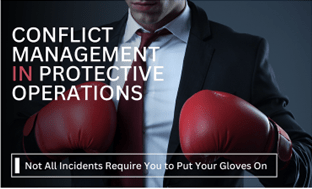
Conflict Management In Protective Operations

One of the most underestimated qualifications for executive protection professionals is their ability to deal with #conflict as it pertains to incidents that occur while on duty, as well as off duty. Every #security professional, regardless of their role, will inevitably encounter disagreements and confrontations. These conflicts can arise from differing opinions, expectations, or agendas. However, the way these conflicts are dealt with can be the difference between a safe resolution and a potentially uncontrolled, threatening situation. The ability to manage conflict effectively is, therefore, a non-negotiable skill set for any security professional. How you deal with a tense situation and how fast you resolve it can be crucial for everyone, particularly for the safety of your client, your team’s, and yours.

If conflict remains unsolved or mismanaged, it may lead to a dangerous environment. A disgruntled fan, for instance, who is denied a photo opportunity with their idol, may react unpredictably if their emotions are not appropriately managed. Conflicts, in this context, arise from disagreements or clashes of interest between two or more parties. This could be an irate client, an aggressive member of the paparazzi, a restless fan, or even a stressed family member of the client.

Conflict situations often rise up quickly and can be potentially triggered by strong emotions, such as anger, sadness, insult, or embarrassment. An effective conflict manager must also possess emotional intelligence to control their own emotions, remain calm, use clear and polite language, and maintain a positive attitude. This is as much, or more, about managing yourself as it is about managing the overall conflict.

Understanding Conflict in Protective Operations

Conflict is a natural part of human interaction. It arises when individuals have differing viewpoints or when their expectations aren’t met or are misunderstood. While it’s impossible to agree with everyone on every issue, how one manages these disagreements is crucial, especially in the executive protection sector. For instance, an agitated fan waiting in line for hours might react unpredictably if their emotions, driven by a need to be recognized, aren’t addressed appropriately. The way you approach a conflict situation can change during the course of the situation, but it can also change the result of it.

Why is it important for executive protection agents to be trained in conflict management?

It is important for executive protection agents to be trained in #conflictmanagement for several reasons:

1. Prevention of Violence/De-escalation: EP agents often work in high-stress environments where conflicts can escalate quickly, leading to #violence or other security #risks. By having the skills to manage and resolve conflicts effectively, EP agents can prevent situations from getting out of control and reduce the risk of harm to their clients, themselves, their colleagues, and/or the public.

2. Maintaining Safe and Secure Environments: Conflict can disrupt the normal functioning of an organization or community, and it can have negative impacts on #safety and security. EP agents who are trained in conflict management can help to maintain safe and #secure environments by quickly identifying and resolving conflicts before they escalate.

3. Enhancing Communication Skills: Conflict management training can enhance the communication skills of EP agents, which are essential for effective conflict resolution. Effective communication skills can help to de-escalate conflicts and foster positive relationships with the client, household personnel, the public, colleagues, and other stakeholders.

4. Better Decision-Making: Conflict management training can also improve the decision-making skills of EP agents. When faced with a conflict, these professionals must make quick and effective decisions that are in the best interest of public safety and their client’s safety. Conflict management training can help security professionals to make informed and rational decisions in high-pressure situations.

5. Operational Excellence: Conflicts can also arise in the context of security #operations, such as during #event security or protective operations. Effective conflict management techniques can help ensure that these activities are carried out in a way that minimizes harm to anyone involved and maintains the security of the operation.

Different types of conflict

There are several types of conflict, including Interpersonal conflict, Organizational conflict, Economic conflict, Intergroup conflict, Societal conflict, Internal conflict, External conflict, and Intra-personal conflict. Each type has its own unique characteristics, causes, and potential solutions. Effective conflict resolution strategies often depend on accurately identifying the type of conflict and tailoring the approach to the specific situation.

What kind of conflicts are more common for Executive Protection agents to encounter in their work?

  • Interpersonal Conflicts: EP agents may encounter conflicts between individuals, such as disagreements between co-workers, customers, the public, clients, and their family members.
  • Organizational Conflicts: EP agents may encounter conflicts within their organization, such as disputes between management and employees or conflicts over policies and procedures.
  • Legal Conflicts: EP agents may encounter conflicts related to legal issues, such as disputes over contracts, liability, payment, or work conditions.
  • Cultural Conflicts: EP agents may encounter conflicts related to cultural differences, such as conflicts related to language barriers, customs, or religious practices.
  • Conflict with law enforcement or regulatory authorities: EP agents may need to deal with conflicts that arise between their organization and law enforcement or regulatory authorities, such as disputes over compliance or licensing requirements.
  • Conflict with external groups or individuals: EP agents may need to manage conflicts that arise between their organization and external groups or individuals, such as protesters or activists who disagree with the organization’s policies or actions.
  • Conflict related to security risks: EP agents may need to manage conflicts related to security risks, such as disagreements over the best approach to mitigating a security threat or managing the consequences of a security breach.
  • Conflict related to resource allocation: EP agents may need to manage conflicts related to resource allocation, such as disputes over budget allocations or competing priorities for security resources.

What causes conflict?

It is important to understand the underlying causes of conflict to effectively manage and resolve conflicts. As we will see there are many causes and sources of conflict, which can vary depending on the context and the parties involved.

Most common causes and sources of conflict:

  • Bad Communication
  • Differences in values and beliefs
  • Competition for resources
  • Power imbalances.
  • Personality clashes
  • External factors
  • Historical Grievances

What are the consequences of conflict mismanagement in protective operations?

Mismanaging conflict in protective operations can have serious consequences, including:

  • Escalation of violence: If conflicts are not managed effectively, they can quickly escalate and turn violent, posing a risk to the safety of the EP agent, the client, and the public.
  • Compromised security: Conflict can distract the EP agents from their primary duties, leaving vulnerabilities that can be exploited by #criminals or other #hostile actors.
  • Damage to reputation: Mismanagement of conflict can damage the #reputation of security organizations and reduce public trust in their ability to maintain safety and security.
  • Legal consequences: If conflicts are mishandled, EP agents and their organizations may face legal action or #liability, which can be costly and damaging to their reputation.
  • Employee turnover: Unresolved conflicts can lead to high levels of #stress and dissatisfaction among executive protection personnel, leading to higher turnover rates and reduced productivity.
  • Reduced effectiveness: Mismanaged conflicts can reduce the effectiveness of protective operations, as personnel may be distracted by ongoing conflicts and unable to focus on their primary responsibilities.

Managing Conflict Situations

***Conflict resolution starts with understanding what is happening and why is happening***

Effective conflict management in executive protection settings involves several key principles, including active listening, clear communication, respect for different perspectives, and a focus on finding mutually beneficial solutions. By using these principles to manage conflicts, EP agents can build trust and maintain positive relationships with the public, while also preventing or de-escalating potential security threats.

The key to successful conflict management lies in communication. A good understanding of both verbal and non-verbal communication can help defuse tensions, as can empathizing with the aggrieved party and acknowledging the problem. Overarching all of these is the respect we must have for differences, be it cultural, professional, religious, or economically driven.

Photo by Andrea Piacquadio on Pexels.com

Essential Conflict Management Skills

  • Professionalism and Positivity: Always maintain a professional demeanor. Use clear, polite language and remain calm. Having a positive and peaceful approach will begin to lower any tension.
  • Effective Communication: Vital for defusing potential conflicts. Listening actively and speaking clearly can prevent misunderstandings.
  • Stress Management: Stay alert and calm, even under pressure. A calm demeanor aids in understanding both verbal and non-verbal cues. Be able to manage your own stress levels, when you are calm, you can have a better understanding of both verbal and nonverbal communication.
  • Emotional Regulation: Emotions can be contagious, especially emotions like fear, anger, and anxiety. Another person’s emotion may affect your actions, thoughts, feelings, and vice versa. By controlling your own, you can prevent escalating the situation. Remember that in most cases you may be called names, be insulted, or accused of things that are not true. If you can control your own emotions, you will be able to use a calmer voice, proper words, and use positive body language therefore the other person won’t feel, threatened, insulted, challenged, or frightened of you.
  • Empathy and Respect: Recognize the importance of others’ feelings and always be respectful of differences, whether cultural, religious, or otherwise. No matter how unimportant to you a matter may seem, to that person, it is very important and apparently has made them feel that way (angry, sad, disappointed, insulted, etc.). Always be mindful and respect the diversity of cultural, professional, religious, economical, etc. backgrounds. Avoid any word or gesture that may be disrespectful or be seen, or misunderstood, as a slur or stereotypical judgment.

Identify, Assess, and Mitigate Risks in Conflict Situations

Recognizing potential #threats, assessing the situation and the people involved, and adjusting responses accordingly, are essential steps in conflict #mitigation. It may also be necessary to take a step back and/or call for help or assign someone else to deal with the situation. If you have gotten too close to the situation, having someone new handle the de-escalation can bring about a more peaceful conclusion to the conflict. In many cases, adopting an assertive behavior rather than an aggressive one, maintaining personal space, and calmly building rapport with the aggrieved party can also significantly decrease the tempo and reduce risks associated with the conflict.

Risk Mitigation in Conflict Situations:

  • Understand the Individual: Listen honestly and actively to their concerns and emotions.
  • Empathy and Apology: Even if not directly at fault, acknowledging their feelings can de-escalate tensions.
  • Acknowledge the Problem: Reassure them of your intent to help and provide solutions.

Conflict Management Strategies to Reduce Risk

  • Recognize potential threats.
  • Assess the situation and environment.
  • Adjust your response based on the assessment.
  • Maintain personal space and adopt a non-aggressive stance.
  • Remain calm, remember that your demeanor can influence the other person’s behavior.
  • Avoid physical contact.
  • If necessary, relocate the conversation to a more suitable location.
  • Listen actively and be aware of your own biases and assumptions.
  • Clearly communicate your role and intent.
  • Adopt assertive, not aggressive, behavior.
  • Try to view the situation from their perspective.
  • Show empathy.
  • Explore options.
  • Be respectful and avoid blaming or shaming.
  • Ask open-ended questions.
  • Be proactive.
  • Avoid arguing, being defensive, making threats and ultimatums.
  • Use “I” statements.
  • Be firm but fair.
  • Know your limits. If the situation doesn’t improve, consider switching with a colleague for improved communication.
  • Document the incident.

Never forget that conflict management in security operations is not about winning or losing, it’s about #mitigating #risks, maintaining #safety, ensuring respect, and fostering understanding. With the right approach, conflict can transform from a potentially explosive threat into an opportunity for growth, understanding, and learning.

If this interests you, or you would like to have your employees trained in Conflict Management please reach out to us!

#ExecutiveProtection #ConflictManagement #SecurityProfessionals #Bodyguards

#FemaleBodyguards #DeescalationTechniques #ProtectiveOperations #RiskMitigation

#EPTraining #SecurityRisks #EffectiveCommunication #EmotionalIntelligence

#SafetyFirst #ProfessionalConflictResolution #SecurityOperations #AggressionManagement

#CrisisManagement #ProtectiveAgents #ConflictResolutionSkills #SecurityThreats

#SecurityBestPractices #CorporateSecurity #EventSecurity

Reading the Room

Can you read the room? One of the most critical skills for executive protection professionals is the ability to ‘’read the room’‘. This skill goes beyond traditional security protocols and involves a keen understanding of human behavior, emotions, and the ability to anticipate potential #risks before they materialize. Being able not only to read your client, but also your teammates, the general public, and any other person you come in contact with during your daily operations, is valuable beyond measure.

A room, in the context of #executiveprotection, refers to any environment or space in which a protected individual operates. It can range from your client’s vehicle, a small meeting room to a large conference hall, a corporate boardroom, or a public event venue. Reading the room involves grasping the nuances of the environment, the people present, and the emotions prevailing within the space. It requires constant vigilance and adaptability to ensure proper communication, positive cooperation with the client, and everyone else surrounding them, as well the client’s safety and well-being at all times.

“Reading the room” enables executive protection agents to detect emotions and adapt their approach, conversational tone, or in most cases just remain quiet. By closely observing body language, facial expressions, and interactions among attendees, staff, corporate members, and even family members, agents can identify not only ‘’moods’’ but also individuals who may pose a risk to the client’s #safety.

A protector’s presence alone can influence the room’s atmosphere. By maintaining a calm and composed demeanor, these professionals can create a sense of security among anyone near or involved with their client. This feeling of #safety is essential for a productive and focused environment, especially during events like high-stakes meetings or public appearances.

We all know that events and situations can change rapidly, especially in the world of executive protection. Agents must be adaptable and quick-thinking, able to adjust their strategies, personalities, and conversational tones on the fly. By reading the room, they can gauge shifts in emotions or intentions, allowing them to respond appropriately and ensure safety remains a top priority.

Reading the room also involves understanding the unspoken cues and dynamics among people in the environment. This understanding can help executive protection agents facilitate effective communication between the client, themselves, and others. By being attuned to the mood and emotions of the room, agents can identify when, or when not, to interject or offer support discreetly, creating a seamless and professional interaction.

In high-pressure situations, emotions can run high, potentially leading to conflict or crisis. Agents who can read the room have a better chance of de-escalating tense situations before they escalate into something more significant. Their ability to identify the triggers of potential conflicts and address them promptly can prevent violence and ensure a safe resolution.

The role of an executive protection agent is far more complex than just providing #physicalsecurity. It demands a holistic approach that includes the ability to “read the room” effectively. By understanding the environment, emotions, and potential threats within a space, #protectors can create a #secure and productive atmosphere for their clients. This skill is paramount in ensuring the safety and well-being of those under their care, making it an indispensable aspect of the executive protection profession.

#ExecutiveProtectionInsights #ReadTheRoom #BehavioralAwareness #SecurityBeyondProtocols #EmotionalIntelligence #AnticipateRisks #BodyLanguageMastery #DeescalationSkills #HolisticProtection #SafetyFirstAlways #EmotionDetection #ProtectionBeyondSecurity #ExecutiveProtection #Bodyguards #FemaleBodyguards #ExecutiveProtectionCompany #SecurityServices #CorporateSecurity #FamilyProtection #CelebrityBodyguards

5 Common Marketing Mistakes Security Companies Make Every Day

Effective marketing is paramount for security companies seeking to thrive in a competitive industry. Unfortunately, many of them struggle to effectively reach their target audience and convey their expertise. Let’s see the five common mistakes that security companies often make when marketing their services.

    1) Overusing Technical Terms: A significant mistake made by security companies is flooding their marketing efforts with complex technical terms. While expertise is vital, potential clients may not comprehend the intricacies of the security industry. To overcome this, companies should adopt clear and concise communication that emphasizes the benefits of their services to end-users. Simplifying language and utilizing relatable examples can facilitate better understanding among the target audience. Use of acronyms, abbreviations, and polynomials that only those in the industry would readily use and recognize can quickly alienate your potential clients.

2) Neglecting Online Presence and Social Media:  In today’s digital age, a robust online presence can be valuable and offer free advertising for any business. Regrettably, many security companies overlook the potential of social media and online platforms (or, more problematic, they use the wrong social media platforms). Establishing a compelling website, creating engaging and educational content, and maintaining an active and targeted social media presence can significantly enhance brand visibility and broaden their audience reach. Strategic use of specific social media platforms suitable for marketing security services is essential for maximizing the impact of digital efforts.

    3) Lack of Targeted Marketing Strategies: A common pitfall for security companies lies in either inadequate knowledge of marketing practices or hiring marketing agencies unfamiliar with the security industry. At Mellon360, we possess both security expertise and marketing expertise, offering clients the best of both worlds. Tailoring marketing strategies to specific target audiences and speaking the industry’s language are critical in addressing varying marketing needs. Precise identification of the target audience enables effective communication and establishes credibility within the security industry. Presenting the wrong picture or the use/overuse of the wrong terms or language is just as damaging as nothing said or done at all-Perhaps even more!

   4) Failing to Demonstrate Thought Leadership: In the security industry, trust and credibility hold utmost importance. However, some companies and professionals fail in establishing themselves as thought leaders and industry experts. Providing valuable and educational content through blog posts, whitepapers, webinars, or podcasts, positions security companies and individuals as authoritative sources of information, thus fostering trust among potential clients and bolstering brand reputation.

   5) Neglecting Industry Partnerships and Collaborations: A common oversight among security companies is operating in isolation, solely focused on their own services without exploring collaborative opportunities with industry peers. By neglecting to form strategic alliances with complementary businesses, these companies miss out on valuable prospects for expansion and offering comprehensive solutions to clients. Embracing partnerships with reputable IT service providers, insurance companies, family offices, or property management firms can tap into new client bases and provide access to additional resources. Such collaborative efforts drive innovation and exhibit the company’s commitment to holistic security solutions. Where one can do well, two or even more, when carefully aligned, have the potential to accomplish so much more as a collaborative effort!

Do you need marketing and branding experts specialized in the security industry? Reach out today to Mellon360. We will help you boost your brand and effectively convey your expertise, build brand trust, and expand your market presence!