Event Security for High Profile Individuals

In the last months, we have seen many videos from what one may label a ‘failed’ security operation where public figures were attacked or embarrassed during their public appearance at an event. Protecting high-profile individuals during an event or public speech requires very careful and detailed planning. Despite the big challenges for the security team, public events are essential for high-profile individuals, especially for politicians, celebrities, or business leaders who need to engage with their fans, audience, or electorate.

Event Security is a uniquely separate topic, and one needs to spend quite some time studying it and implementing all the necessary steps. Unfortunately, most EP schools do not teach it, and some invest very little time in it considering the fact that the key to Event Security is to manage and mitigate the risks with thorough planning, intelligence, and coordination of multiple parties involved.

The protective measures for any event will depend on the event size (private, public, big, small), event purpose (political, cultural, educational, etc.), threat levels, speakers’ public visibility, and value to their organization. (what is the value of each speaker if they get harmed or embarrassed?)

Understanding the complexities involved in securing high-profile individuals during public events and why such events can pose several inherent risks for high-profile individuals.

Visibility: Public events mean the high-profile person is largely exposed, making it easier for potential attackers to locate, approach, or target them. When your clients are on the platform (Behind the podium) or anywhere on the stage, they are vulnerable targets.

Predictability: Public events are almost always scheduled and provide potential attackers with the time to plan their actions. Even with meticulous security planning, knowing the timing and location of an event in advance gives adversaries a significant advantage.

Crowd Control and Media Challenges: Large gatherings are inherently harder to control. Even with barriers and security personnel, managing a crowd can be unpredictable. Someone with malicious intent could potentially blend in or infiltrate as the event support help or basic crowd control, making detection harder and giving them very proximal access. The media coverage that accompanies many public events involving high-profile individuals can be a double-edged sword. While it spreads the message of the event from a marketing aspect, it also broadcasts the vulnerabilities and security arrangements in real time.

Multiple Access Points: Venues for public events often have multiple entry and exit points, which can be difficult to secure completely.

Multiple Parties Involved: Event organization involves the coordination of multiple parties, vendors, venue management, event organizers, and even different security entities. Your client is not the only one with a security detail, most of the time you will find the presence of law enforcement, uniformed guards, and Executive Protection teams for multiple public figures who are present. More involved parties make the coordination harder as communication or logistical breakdowns among these parties can create security vulnerabilities and confusion.

Sniper and Active Shooter Threats: Open-air events or events with vast, unobscured perimeters can pose sniper threats, especially if there are high vantage points nearby. An active shooter can be another threat for events since one can find many people who share the same ideas, and goals (political, social, etc.) gathered in the same place.

Terrorist Attack and Bomb Threats: Crowded areas are high-impact targets for those wanting to cause mass harm. This makes guests and staff screening, detection of explosives (K9 is best), and managing evacuation protocols critically important.

Public Sentiment: High-profile individuals, especially politicians or controversial figures, can evoke strong emotions. Public events can attract not just fans and supporters, but also protestors or individuals with negative or hostile intentions.

Reliance on Local Infrastructure: High-profile individuals and their security teams often have to rely on local infrastructure, which they might not be familiar with. This includes clearly understanding local threats, coordination and relying on local law enforcement, and navigating unknown, or lesser-known, venues. How many times have you found yourself in an event where if it was for you, you would have never chosen that place from a security standpoint? The thing to always remember is that security teams, for the most part, have very little or no say in the venues and must work with and do their best to function with and plan around, the circumstances, locations, and other plans made by individuals who do not have security protocols in mind.

Basic Considerations for Securing Your Client during Public Events:

Photo by Werner Pfennig on Pexels.com

Advance Planning & Risk Assessment: Conduct a thorough risk assessment of the venue, identifying potential threats and vulnerabilities. Scout the location beforehand. Look for multiple entry and exit points, chokepoints, and rooms that can be used as safe rooms. Assess local threat intelligence and political climate.

Physical Security: If you are responsible for the event security, establish a secure perimeter around the venue with barricades or barriers. Control access points with security personnel, metal detectors, and possibly explosive-detection canine units. Inspect the stage/platform and immediate surroundings for potential threats and listening devices. Ensure that there’s an emergency evacuation route and a safe room or fallback position. If you have no control over the event security planning and your client is invited as a speaker/guest then consider gathering as much information you can for the established security measures, evacuation plans, and other speakers/guests (your client may be at risk because he is present in an event where another speaker who is targeted is present). Now is your chance to put your soft skills into action and make friends with event organizers, event security, and law enforcement.

The Podium: In public speeches, when your client is on the podium, he is the perfect target, all lights and attention are on him. The podiums are usually lightweight and small. If the threat level is high, you should consider placing armored plates for better ballistic protection. Consult your client to avoid unnecessary movements from the podium. Consider placing your own protective agents as close as possible to the podium and in crucial spots where they can react if needed be. Establish a plan for reaction and evacuation, rehearse it with your team, and make sure your client is briefed on it as well.

Seating Arrangements: If possible, consider having the client seating in a location that is lower than the security team so that he is less visible. Bear in mind that depending on how many high-profile speakers/guests will be present, the number of seats for the security team will be very limited. On many occasions, you won’t be able to sit next to or close to your client. As all the spots are reserved for guests only. The ideal seating plan would be half-moon (semicircular) shaped with the front row being lower than the back. When the threat level is high, serious consideration should be given to armoring the chair and the speaking podium with armored plates. If possible, arrange to have known personnel, to you and your client, seated next to or close to him.

The Stage: If you are the one responsible for the event security, consider keeping a good distance from the stage to the first row of seats of at least 7-8 meters. In this area, only security personnel or individuals accompanied by security team members should move. The first row of seats should be empty to act as a barrier to anyone from the crowd wanting to approach the stage. The second row should be for individuals who are speakers. When these individuals would need to go on stage, only half of the seats should be reserved so that they approach from one side and return to their row from the other. This way, the front of the stage will never be filled with people which someone could use as cover for an attack. The security team members should be positioned around the guests to have a full visual check of the audience. They should be able to intervene anywhere throughout, and no one should be able to get near the stage unaccompanied.

Personnel: If you are responsible for the event’s security, deploy both uniformed and plainclothes security personnel who can blend in with your guests. Screen all the vendors, catering, and anyone who has access and a presence at the event. Consider having an emergency medical team on standby.

Communication: Establish a clear communication plan among all security teams. Designate codewords for specific emergencies, code names, use encrypted radios, and have a backup communication method.

Surveillance & Counter-surveillance: Use CCTV to monitor the crowd and surroundings. Deploy undercover agents in the crowd for counter-surveillance and to identify suspicious behavior. Each report should be immediately evaluated for relevance and threat level.

Vehicle Security: The driver always stays in the vehicle. Plan multiple egress routes from the location to account for different scenarios.

Screening & Access Control: Ensure that everyone entering the venue undergoes thorough screening. Control VIP areas and ensure only authorized personnel have access. Use a guest list or invitation-only system if possible.

Public Interaction: If your client plans to interact with the audience or media, pre-plan your team’s positions and manage the crowd accordingly. Watch out for anything/anyone that stands out as unusual and always watch the hands of those close to your client. Are they holding something that can harm or embarrass him? Be prepared to extract your client swiftly in the event of a disturbance. Hands, hands, hands…And scan your zone of responsibility and scan again.

Intelligence & Coordination: Do your intelligence gathering and evaluation. Monitor social media for any potential threats or discussions that might indicate planned disruptions. Digital forensics can also play a role in pre-event threat assessment. Liaise with local law enforcement and potentially federal agencies (depending on who your client is, on the country and threat level). Gather intelligence on any known threats or groups that may target your client, or other speakers at the event.

Case Studies: Highlight previous incidents involving security breaches or attacks on high-profile individuals during public events. Discuss what went wrong and the lessons learned from each incident.

Utilize Technology: This includes surveillance drones, facial recognition systems, biometric access controls, and AI-driven threat detection systems.

Liaison with Other Entities: Collaboration with other guests’ security teams, agencies, and private security firms can provide additional resources and intelligence. Highlight the importance of sharing information and working in tandem.

Psychological Profiling: Make sure your team has a good understanding of crowd psychology and potential attacker profiles. This can help in preempting potential threats. Using COVPRO agents in the crowd will always give a significant advantage when providing a proactive response.

After-Action Reviews: After every event, conduct a debriefing session. Discuss what went well, what could be improved, and any potential threats that were identified. This helps in refining strategies for future events.

Legal and Ethical Considerations: Discuss the balance between ensuring security and respecting individual rights. In many jurisdictions, there are legal limitations on what security personnel can do, especially concerning personal searches, data collection, and surveillance.

Remember, during events, the goal is to have multiple layers of security so that if any one layer fails, another can immediately respond. The most effective protection details work quietly in the background, providing a safe environment while being as unobtrusive as possible.

Do you want to learn more about Event Security and our specialized courses? Contact Us Today!

#eventsecurity #EventSecurityTips #HighProfileProtection #PublicAppearanceSafety #CelebritySecurityTips #PublicEventsProtectionStrategies #BusinessLeaderSafety #SecurePublicEngagements #EventRiskManagement #PublicEventsSecurityRisks #ProtectiveLayersForVIPs #LeMareschalSecurity #EventSecurityTraining #SecurityMasterclasses
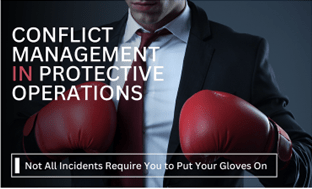

Conflict Management In Protective Operations

One of the most underestimated qualifications for executive protection professionals is their ability to deal with #conflict as it pertains to incidents that occur while on duty, as well as off duty. Every #security professional, regardless of their role, will inevitably encounter disagreements and confrontations. These conflicts can arise from differing opinions, expectations, or agendas. However, the way these conflicts are dealt with can be the difference between a safe resolution and a potentially uncontrolled, threatening situation. The ability to manage conflict effectively is, therefore, a non-negotiable skill set for any security professional. How you deal with a tense situation and how fast you resolve it can be crucial for everyone, particularly for the safety of your client, your team’s, and yours.

If conflict remains unsolved or mismanaged, it may lead to a dangerous environment. A disgruntled fan, for instance, who is denied a photo opportunity with their idol, may react unpredictably if their emotions are not appropriately managed. Conflicts, in this context, arise from disagreements or clashes of interest between two or more parties. This could be an irate client, an aggressive member of the paparazzi, a restless fan, or even a stressed family member of the client.

Conflict situations often rise up quickly and can be potentially triggered by strong emotions, such as anger, sadness, insult, or embarrassment. An effective conflict manager must also possess emotional intelligence to control their own emotions, remain calm, use clear and polite language, and maintain a positive attitude. This is as much, or more, about managing yourself as it is about managing the overall conflict.

Understanding Conflict in Protective Operations

Conflict is a natural part of human interaction. It arises when individuals have differing viewpoints or when their expectations aren’t met or are misunderstood. While it’s impossible to agree with everyone on every issue, how one manages these disagreements is crucial, especially in the executive protection sector. For instance, an agitated fan waiting in line for hours might react unpredictably if their emotions, driven by a need to be recognized, aren’t addressed appropriately. The way you approach a conflict situation can change during the course of the situation, but it can also change the result of it.

Why is it important for executive protection agents to be trained in conflict management?

It is important for executive protection agents to be trained in #conflictmanagement for several reasons:

1. Prevention of Violence/De-escalation: EP agents often work in high-stress environments where conflicts can escalate quickly, leading to #violence or other security #risks. By having the skills to manage and resolve conflicts effectively, EP agents can prevent situations from getting out of control and reduce the risk of harm to their clients, themselves, their colleagues, and/or the public.

2. Maintaining Safe and Secure Environments: Conflict can disrupt the normal functioning of an organization or community, and it can have negative impacts on #safety and security. EP agents who are trained in conflict management can help to maintain safe and #secure environments by quickly identifying and resolving conflicts before they escalate.

3. Enhancing Communication Skills: Conflict management training can enhance the communication skills of EP agents, which are essential for effective conflict resolution. Effective communication skills can help to de-escalate conflicts and foster positive relationships with the client, household personnel, the public, colleagues, and other stakeholders.

4. Better Decision-Making: Conflict management training can also improve the decision-making skills of EP agents. When faced with a conflict, these professionals must make quick and effective decisions that are in the best interest of public safety and their client’s safety. Conflict management training can help security professionals to make informed and rational decisions in high-pressure situations.

5. Operational Excellence: Conflicts can also arise in the context of security #operations, such as during #event security or protective operations. Effective conflict management techniques can help ensure that these activities are carried out in a way that minimizes harm to anyone involved and maintains the security of the operation.

Different types of conflict

There are several types of conflict, including Interpersonal conflict, Organizational conflict, Economic conflict, Intergroup conflict, Societal conflict, Internal conflict, External conflict, and Intra-personal conflict. Each type has its own unique characteristics, causes, and potential solutions. Effective conflict resolution strategies often depend on accurately identifying the type of conflict and tailoring the approach to the specific situation.

What kind of conflicts are more common for Executive Protection agents to encounter in their work?

  • Interpersonal Conflicts: EP agents may encounter conflicts between individuals, such as disagreements between co-workers, customers, the public, clients, and their family members.
  • Organizational Conflicts: EP agents may encounter conflicts within their organization, such as disputes between management and employees or conflicts over policies and procedures.
  • Legal Conflicts: EP agents may encounter conflicts related to legal issues, such as disputes over contracts, liability, payment, or work conditions.
  • Cultural Conflicts: EP agents may encounter conflicts related to cultural differences, such as conflicts related to language barriers, customs, or religious practices.
  • Conflict with law enforcement or regulatory authorities: EP agents may need to deal with conflicts that arise between their organization and law enforcement or regulatory authorities, such as disputes over compliance or licensing requirements.
  • Conflict with external groups or individuals: EP agents may need to manage conflicts that arise between their organization and external groups or individuals, such as protesters or activists who disagree with the organization’s policies or actions.
  • Conflict related to security risks: EP agents may need to manage conflicts related to security risks, such as disagreements over the best approach to mitigating a security threat or managing the consequences of a security breach.
  • Conflict related to resource allocation: EP agents may need to manage conflicts related to resource allocation, such as disputes over budget allocations or competing priorities for security resources.

What causes conflict?

It is important to understand the underlying causes of conflict to effectively manage and resolve conflicts. As we will see there are many causes and sources of conflict, which can vary depending on the context and the parties involved.

Most common causes and sources of conflict:

  • Bad Communication
  • Differences in values and beliefs
  • Competition for resources
  • Power imbalances.
  • Personality clashes
  • External factors
  • Historical Grievances

What are the consequences of conflict mismanagement in protective operations?

Mismanaging conflict in protective operations can have serious consequences, including:

  • Escalation of violence: If conflicts are not managed effectively, they can quickly escalate and turn violent, posing a risk to the safety of the EP agent, the client, and the public.
  • Compromised security: Conflict can distract the EP agents from their primary duties, leaving vulnerabilities that can be exploited by #criminals or other #hostile actors.
  • Damage to reputation: Mismanagement of conflict can damage the #reputation of security organizations and reduce public trust in their ability to maintain safety and security.
  • Legal consequences: If conflicts are mishandled, EP agents and their organizations may face legal action or #liability, which can be costly and damaging to their reputation.
  • Employee turnover: Unresolved conflicts can lead to high levels of #stress and dissatisfaction among executive protection personnel, leading to higher turnover rates and reduced productivity.
  • Reduced effectiveness: Mismanaged conflicts can reduce the effectiveness of protective operations, as personnel may be distracted by ongoing conflicts and unable to focus on their primary responsibilities.

Managing Conflict Situations

***Conflict resolution starts with understanding what is happening and why is happening***

Effective conflict management in executive protection settings involves several key principles, including active listening, clear communication, respect for different perspectives, and a focus on finding mutually beneficial solutions. By using these principles to manage conflicts, EP agents can build trust and maintain positive relationships with the public, while also preventing or de-escalating potential security threats.

The key to successful conflict management lies in communication. A good understanding of both verbal and non-verbal communication can help defuse tensions, as can empathizing with the aggrieved party and acknowledging the problem. Overarching all of these is the respect we must have for differences, be it cultural, professional, religious, or economically driven.

Photo by Andrea Piacquadio on Pexels.com

Essential Conflict Management Skills

  • Professionalism and Positivity: Always maintain a professional demeanor. Use clear, polite language and remain calm. Having a positive and peaceful approach will begin to lower any tension.
  • Effective Communication: Vital for defusing potential conflicts. Listening actively and speaking clearly can prevent misunderstandings.
  • Stress Management: Stay alert and calm, even under pressure. A calm demeanor aids in understanding both verbal and non-verbal cues. Be able to manage your own stress levels, when you are calm, you can have a better understanding of both verbal and nonverbal communication.
  • Emotional Regulation: Emotions can be contagious, especially emotions like fear, anger, and anxiety. Another person’s emotion may affect your actions, thoughts, feelings, and vice versa. By controlling your own, you can prevent escalating the situation. Remember that in most cases you may be called names, be insulted, or accused of things that are not true. If you can control your own emotions, you will be able to use a calmer voice, proper words, and use positive body language therefore the other person won’t feel, threatened, insulted, challenged, or frightened of you.
  • Empathy and Respect: Recognize the importance of others’ feelings and always be respectful of differences, whether cultural, religious, or otherwise. No matter how unimportant to you a matter may seem, to that person, it is very important and apparently has made them feel that way (angry, sad, disappointed, insulted, etc.). Always be mindful and respect the diversity of cultural, professional, religious, economical, etc. backgrounds. Avoid any word or gesture that may be disrespectful or be seen, or misunderstood, as a slur or stereotypical judgment.

Identify, Assess, and Mitigate Risks in Conflict Situations

Recognizing potential #threats, assessing the situation and the people involved, and adjusting responses accordingly, are essential steps in conflict #mitigation. It may also be necessary to take a step back and/or call for help or assign someone else to deal with the situation. If you have gotten too close to the situation, having someone new handle the de-escalation can bring about a more peaceful conclusion to the conflict. In many cases, adopting an assertive behavior rather than an aggressive one, maintaining personal space, and calmly building rapport with the aggrieved party can also significantly decrease the tempo and reduce risks associated with the conflict.

Risk Mitigation in Conflict Situations:

  • Understand the Individual: Listen honestly and actively to their concerns and emotions.
  • Empathy and Apology: Even if not directly at fault, acknowledging their feelings can de-escalate tensions.
  • Acknowledge the Problem: Reassure them of your intent to help and provide solutions.

Conflict Management Strategies to Reduce Risk

  • Recognize potential threats.
  • Assess the situation and environment.
  • Adjust your response based on the assessment.
  • Maintain personal space and adopt a non-aggressive stance.
  • Remain calm, remember that your demeanor can influence the other person’s behavior.
  • Avoid physical contact.
  • If necessary, relocate the conversation to a more suitable location.
  • Listen actively and be aware of your own biases and assumptions.
  • Clearly communicate your role and intent.
  • Adopt assertive, not aggressive, behavior.
  • Try to view the situation from their perspective.
  • Show empathy.
  • Explore options.
  • Be respectful and avoid blaming or shaming.
  • Ask open-ended questions.
  • Be proactive.
  • Avoid arguing, being defensive, making threats and ultimatums.
  • Use “I” statements.
  • Be firm but fair.
  • Know your limits. If the situation doesn’t improve, consider switching with a colleague for improved communication.
  • Document the incident.

Never forget that conflict management in security operations is not about winning or losing, it’s about #mitigating #risks, maintaining #safety, ensuring respect, and fostering understanding. With the right approach, conflict can transform from a potentially explosive threat into an opportunity for growth, understanding, and learning.

If this interests you, or you would like to have your employees trained in Conflict Management please reach out to us!

#ExecutiveProtection #ConflictManagement #SecurityProfessionals #Bodyguards

#FemaleBodyguards #DeescalationTechniques #ProtectiveOperations #RiskMitigation

#EPTraining #SecurityRisks #EffectiveCommunication #EmotionalIntelligence

#SafetyFirst #ProfessionalConflictResolution #SecurityOperations #AggressionManagement

#CrisisManagement #ProtectiveAgents #ConflictResolutionSkills #SecurityThreats

#SecurityBestPractices #CorporateSecurity #EventSecurity